Windows 11 Sucks Slightly Less Now, Thanks To A June Update

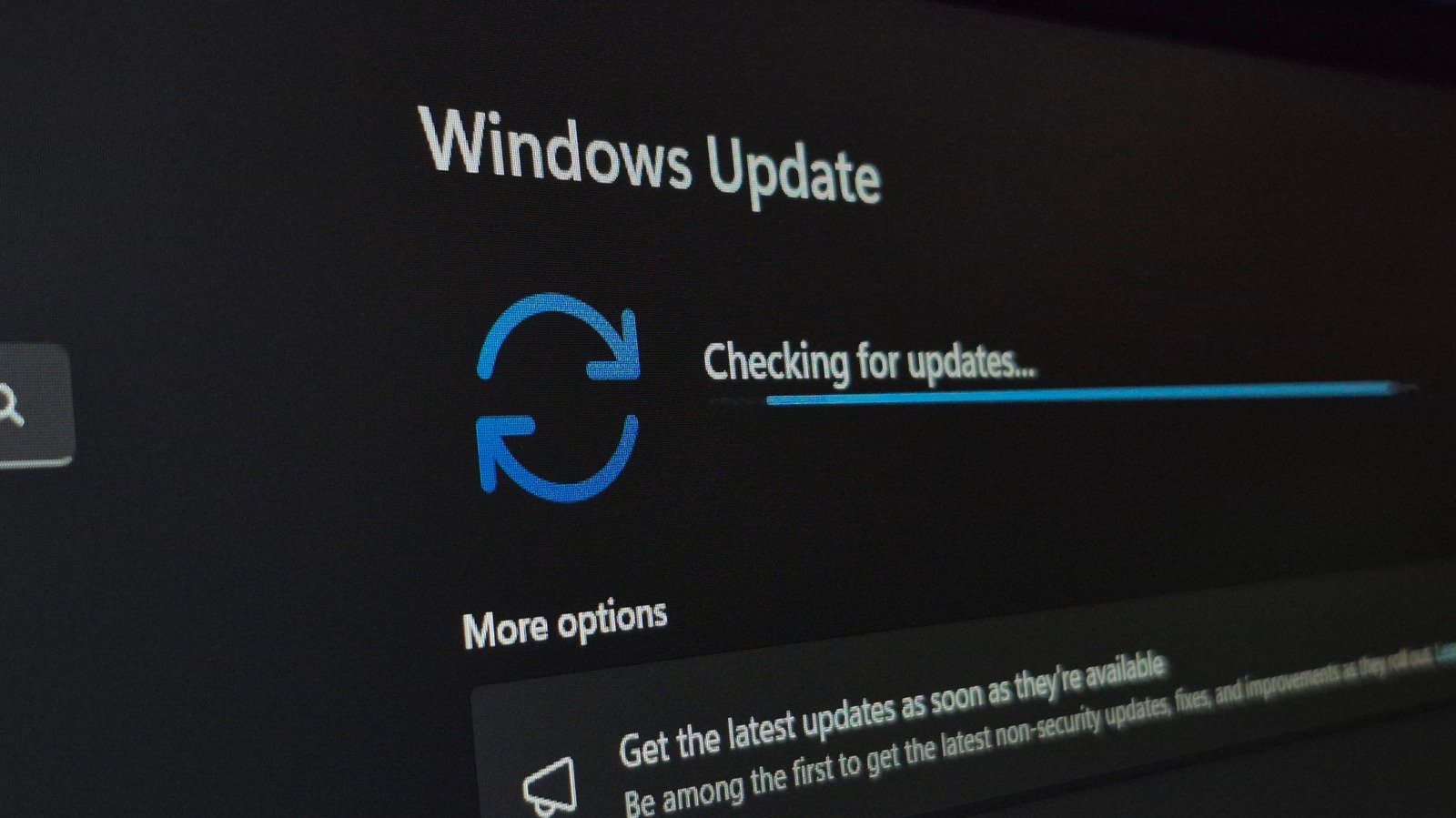
The latest Patch Tuesday update for Windows 11 is among the heaviest in recent memory, bringing a new low-latency mode for smoother system navigation in addition to new features and hundreds of bug and exploit patches. It’s a much needed relief package for Windows 11 as Microsoft puts a renewed focus on its flagship operating system, which has fallen into ill repute among tech enthusiasts over the past several years. The Redmond giant is now dumping Copilot buttons and shipping improvements to UX and performance in long-abandoned areas of the OS.
Users will see the June update as KB5094126 (OS Builds 26200.8655 and 26100.8655) in Windows Update. The big news here is the low-latency profile, which should help to alleviate slow loading times for core system shell elements such as the Start Menu, Action Center, and Search, as well as when launching apps. It’s a simple trick. When a user clicks to open a system element or app, the CPU immediately jumps to its maximum clock speed for a second or three, then jumps back down, providing just enough performance headroom to speed up the launch. Previously, the CPU would need to ramp up with increased load, which could exacerbate sluggish launches. While the low-latency profile is included in the June security update, it won’t be turned on immediately for everybody. You can check whether it’s enabled by watching a live view of your CPU speed in Task Manager or a third-party tool like HWiNFO64. If enabled, you’ll see a very brief spike in CPU activity when you open a system flyaway element like those mentioned above.
Microsoft has been making improvements to the Start Menu for a few months now, and the low-latency profile is more of a capstone on those upgrades. Mine has been much more responsive recently, whereas before all the fixes, I’d often wait a few seconds for it to open. The June update has also made a noticeable improvement in app launch speeds, even on my rather beefy gaming system. As explained by Neowin, there are even more upgrades coming in a future public build, including the ability to remove and add every section of the Start Menu. You can even turn off everything, so that when the Start Menu opens, you’ll only see a notice reading, “All Start sections are turned off.” User choice? In 2026? Pinch me.
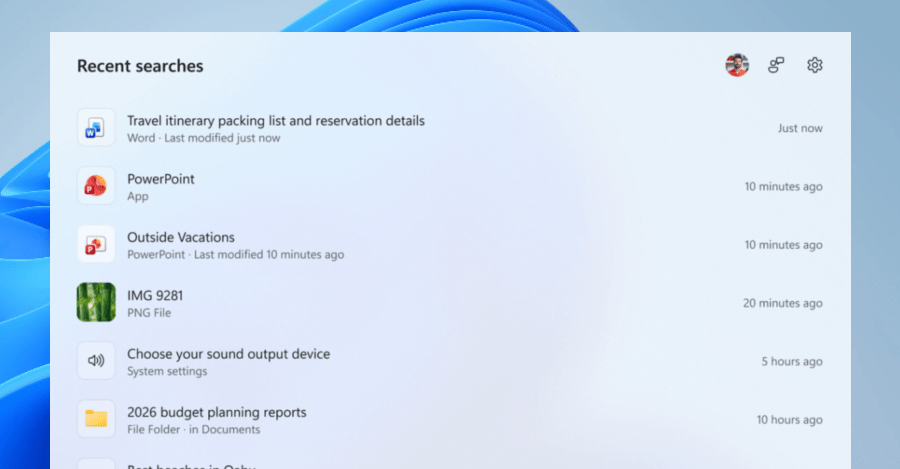
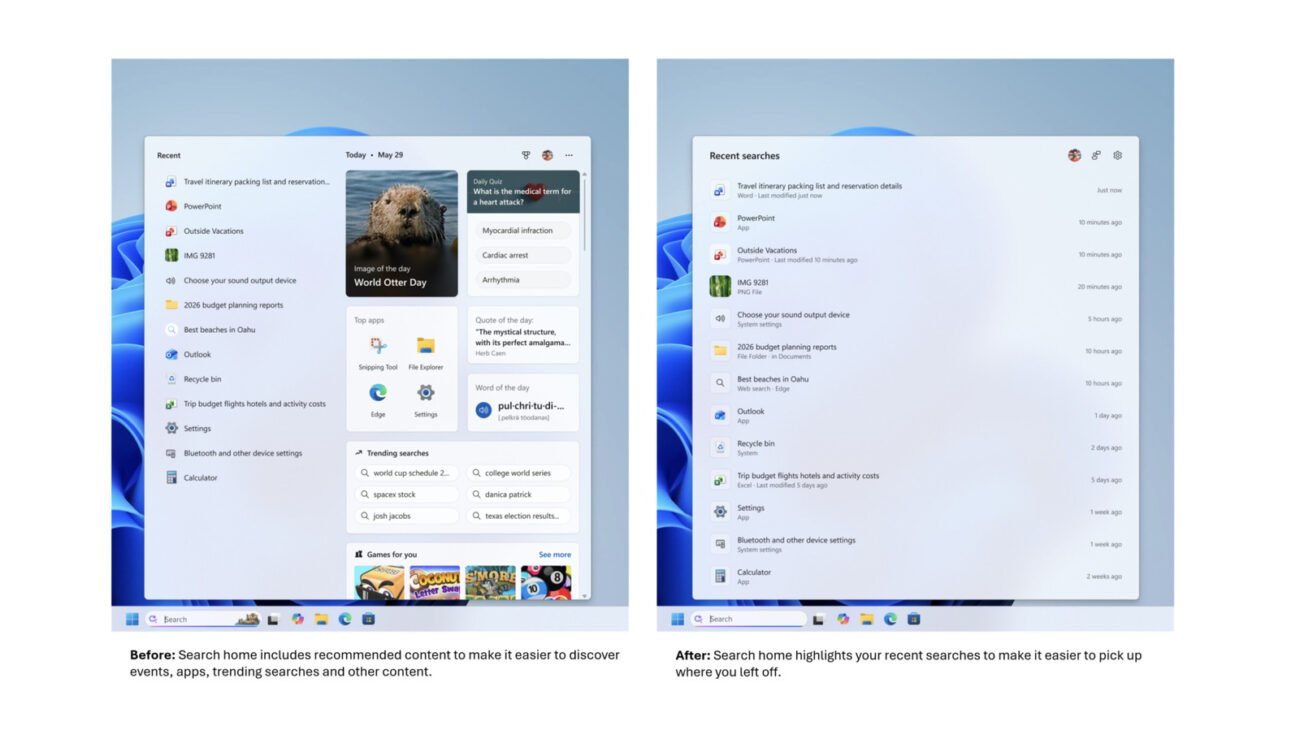
Other Windows 11 bugbears have been bonked with this update, including improvements to downloads from the Windows Store. Previously, downloading and installing updates for apps and system components could be bafflingly slow for many users. That process should now be a lot zippier. Windows Search is now also a bit snappier, as it will begin to surface results after two characters are entered. That’s a big improvement if you’re the kind of person who likes to launch apps by pressing the Start key and typing, or if you use Search frequently.
New features in the June update include multi-app camera support, so you can now be on a Zoom call and take selfies at the same time. It also brings Shared Audio, which allows Windows to broadcast audio to two Bluetooth LE capable headphones or earbuds. Too, you can finally name your user folder to whatever you like when setting up a new Windows install. Lastly, there are new NPU monitoring tools in Task Manager, if you happen to have a PC with a dedicated AI chip.
The biggest change is one you’ll never see. Microsoft has patched a staggering 206 security vulnerabilities, many of which were rated critical or severe, with threats ranging from privilege escalation and remote code execution to information disclosure and spoofing, among other things. One fix (CVE-2026-45657) was especially critical, being a kernel-level remote code execution vulnerability with a threat score of 9.8. Microsoft said in a blog post from May that AI is supercharging vulnerability discovery. Both white and black hat researchers are able to run penetration testing on an inhuman scale, and Microsoft needs to stay ahead in that arms race to keep Windows systems secure.