Benoist F. Drut on Peonies, a Louis XV Armchair + More

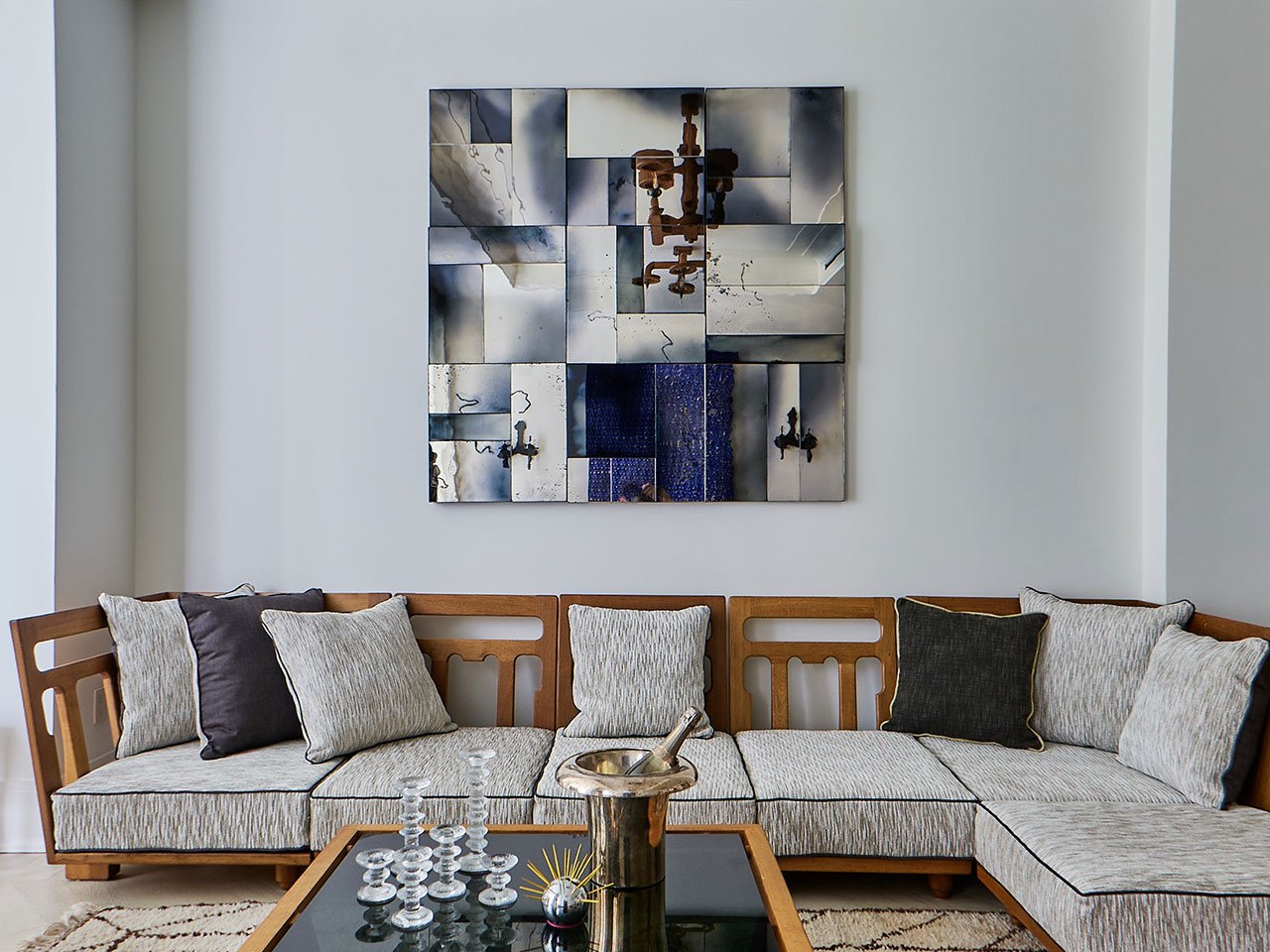
Benoist F. Drut grew up in an idyllic village northwest of Paris, surrounded by lily ponds and castles—a place that honed his eye for beauty. When he was a teen, he met 18th-century French furniture expert Thierry Millerand.
Millerand explained to an inquisitive Drut that the best way to learn about antiques was on the job, but Drut’s parents convinced him to continue his studies. He earned a law degree, but the conversation stayed with him. “That advice fueled my passion, and it was Thierry who first opened my eyes to the world in which I would eventually build my career,” he says.
Photo: Michael Mundy
Drut moved to New York to work with Roger Prigent, a fashion photographer turned dealer, and in 1998 he joined Maison Gerard as a partner. Now the owner of the gallery, he’s known for presentations that feature historic and modern pieces side by side.
With his thoughtful curation, Drut creates meaningful dialogues between the finest examples of French Deco and contemporary design, bringing together different cultures, periods, and artistic perspectives. He has also championed a range of talents and helped to establish their work on a global stage, including Ayala Serfaty, Niamh Barry, and Kiko Lopez.
While Drut appreciates many objects and places, Le Corbusier’s Villa Savoye resonates deeply with him. “I could see myself becoming an architect because I am always fascinated by how buildings are conceived and constructed,” he notes. “Who knows? One day I may pull out a set of sharpened pencils and start sketching structures of my own.”
Today, Benoist F. Drut joins us for Friday Five!

Photo: Benoist F. Drut
1. 1976 Mercedes-Benz 450SL convertible
My 1976 Mercedes-Benz 450SL convertible is an iconic, timeless classic that may be nearly 50 years old, yet it still drives with remarkable power and grace. I fondly named her “Black Beauty,” or simply “BB”—a nod to the legendary French actress, singer, and model Brigitte Bardot. It also sounds like bébé, the French word for baby.
This was always my dream car. As a child, I had a toy model version that I cherished. Years later, while driving through Sullivan County in upstate New York, I spotted the real thing sitting outside a garage. I stopped to ask if it was for sale and was initially told no. With a bit of persistence, the answer became, “At the right price.” Fortunately, they named a price that worked for both of us. I keep Black Beauty running beautifully through regular maintenance and care because the joy I get from driving this German roadster is truly priceless.
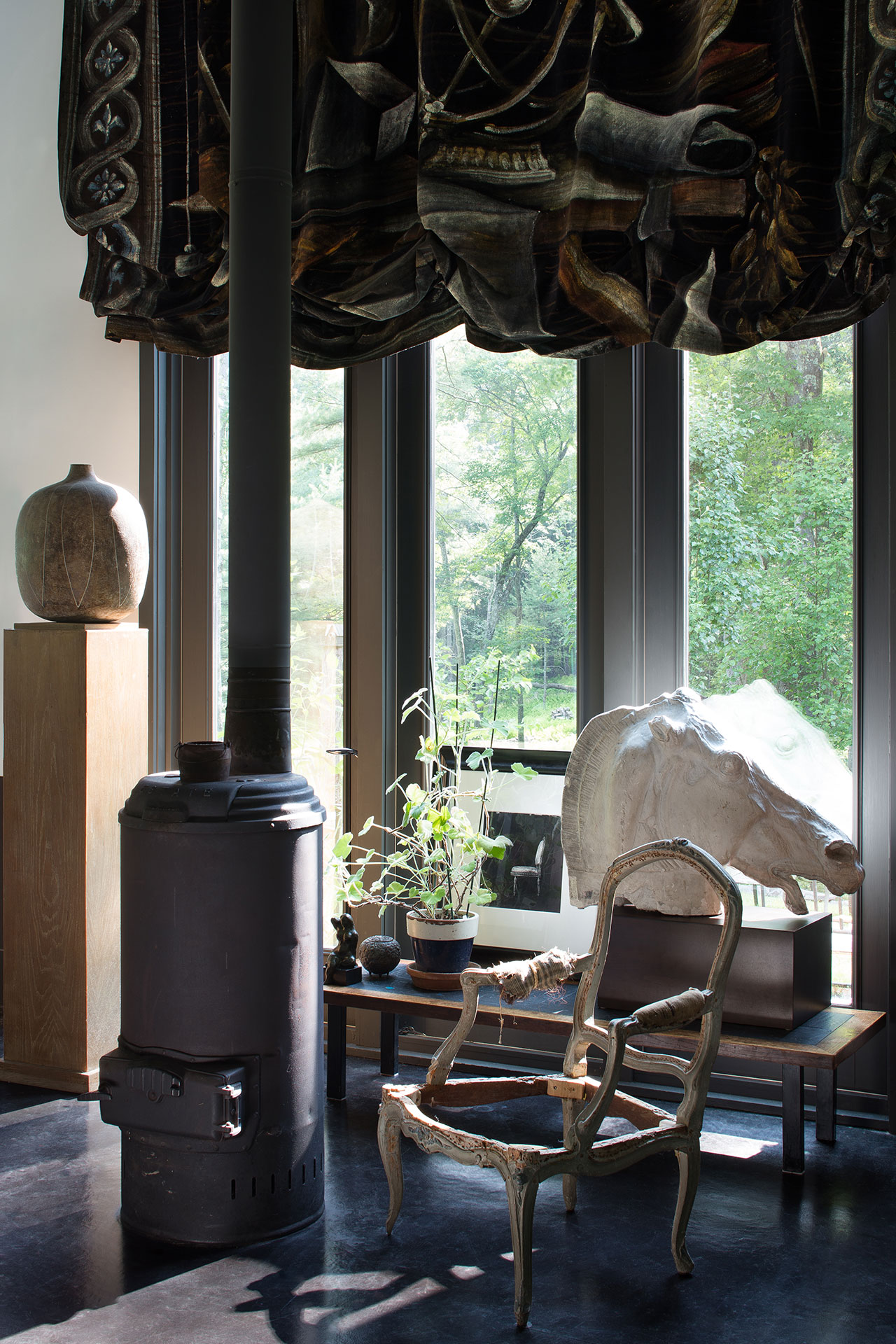
Photo: Jean Francois Jaussaud
2. Louis XV armchair by Jean-René Nadal l’Ainé
Eighteenth-century French furniture was my first love, so acquiring this Louis XV armchair by Jean-René Nadal l’Ainé was incredibly satisfying. What makes it especially remarkable is that it retains its original polychrome finish. Though faded by time, traces of the vibrant painted flowers and ornamentation remain visible along the frame, offering a glimpse into how colorful and lively the chair once was
The upholstery is long gone, but the original horsehair stuffing remained beneath a layer of muslin. Even with damage to one of the front cabriole legs, I saw it as a sculpture in its own right—a beautiful expression of elegant curves and intricate carving. The chair is stamped by Nadal, one of the great Parisian cabinet furniture makers of the period, and finding that stamp brought back memories of my youth. When visiting auction houses, I would crawl beneath chairs and peer into drawers searching for makers’ marks. It was a habit I developed early and one that I still practice today.
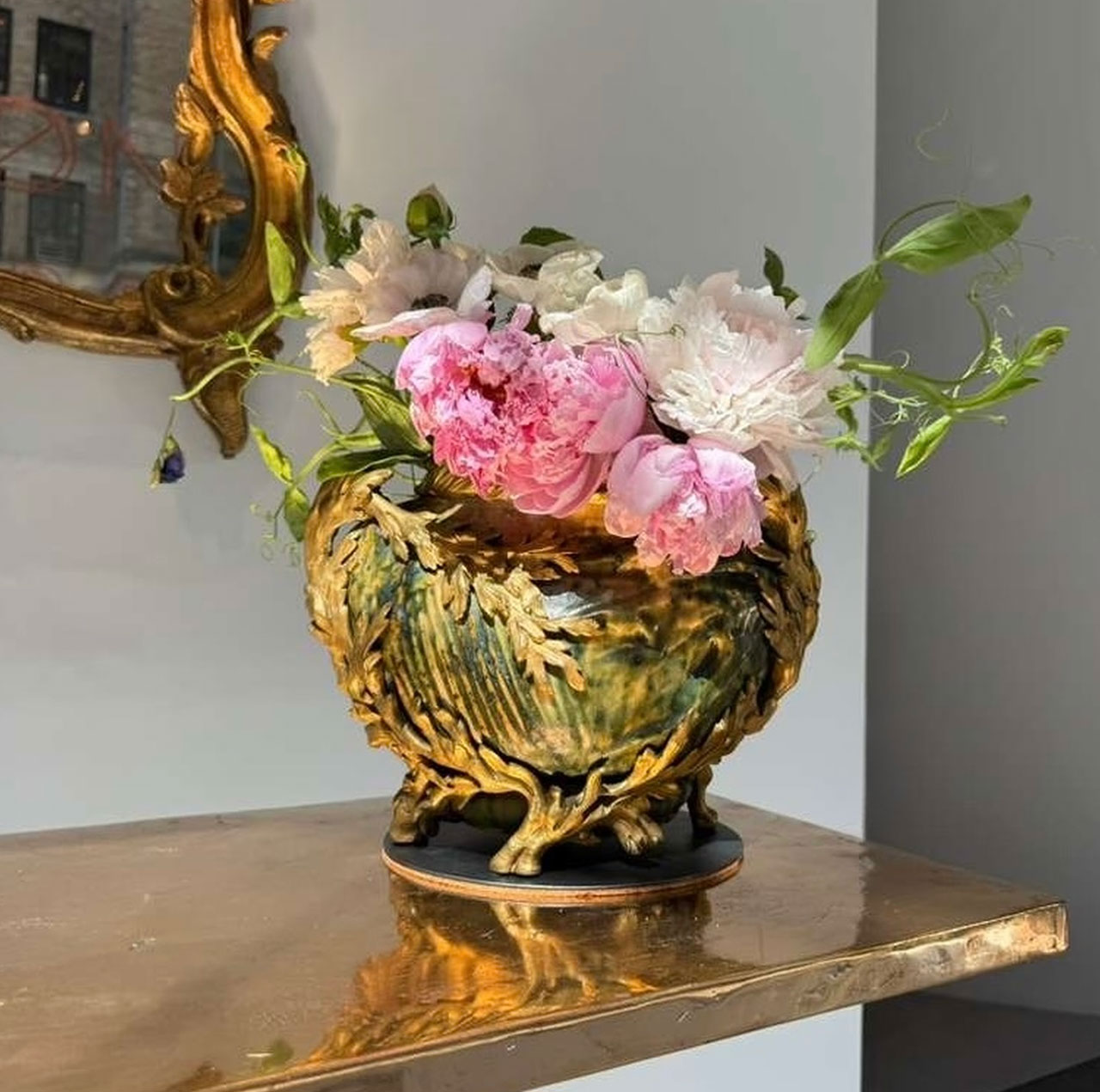
Photo: Benoist F. Drut
3. Peonies
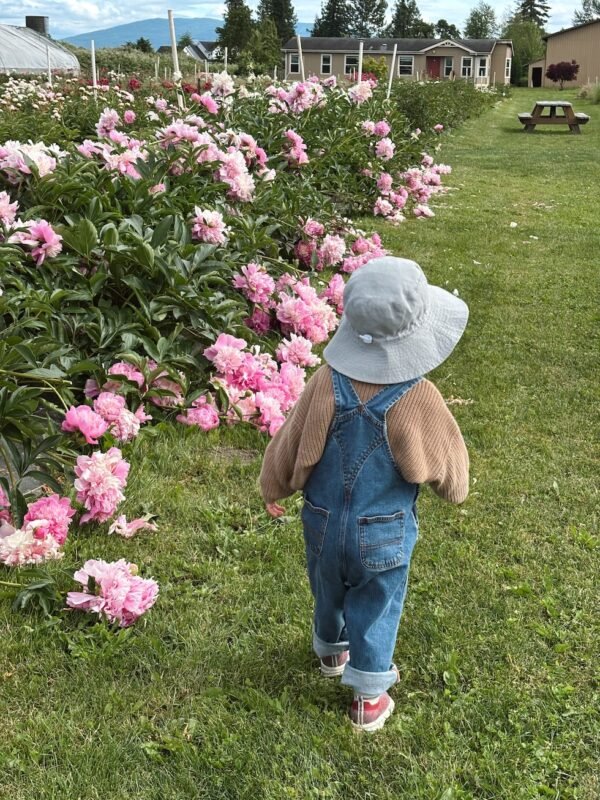
Peonies are among my favorite flowers. Once the gardens at my upstate property were established, planting them was one of my first priorities. Their season is fleeting—just two or three weeks each year—but perhaps that is part of their magic.
For most of the year they quietly occupy their place in the garden. Then every May, the anticipation begins. I watch the tight buds slowly swell before finally bursting into glorious blooms of soft blush pink and creamy white. For a few brief weeks, they fill the garden with beauty and fragrance. Their lush, rounded shape and intoxicating scent make them, to me, the most romantic of flowers. I never tire of bringing armfuls indoors and enjoying every moment of their short-lived display.
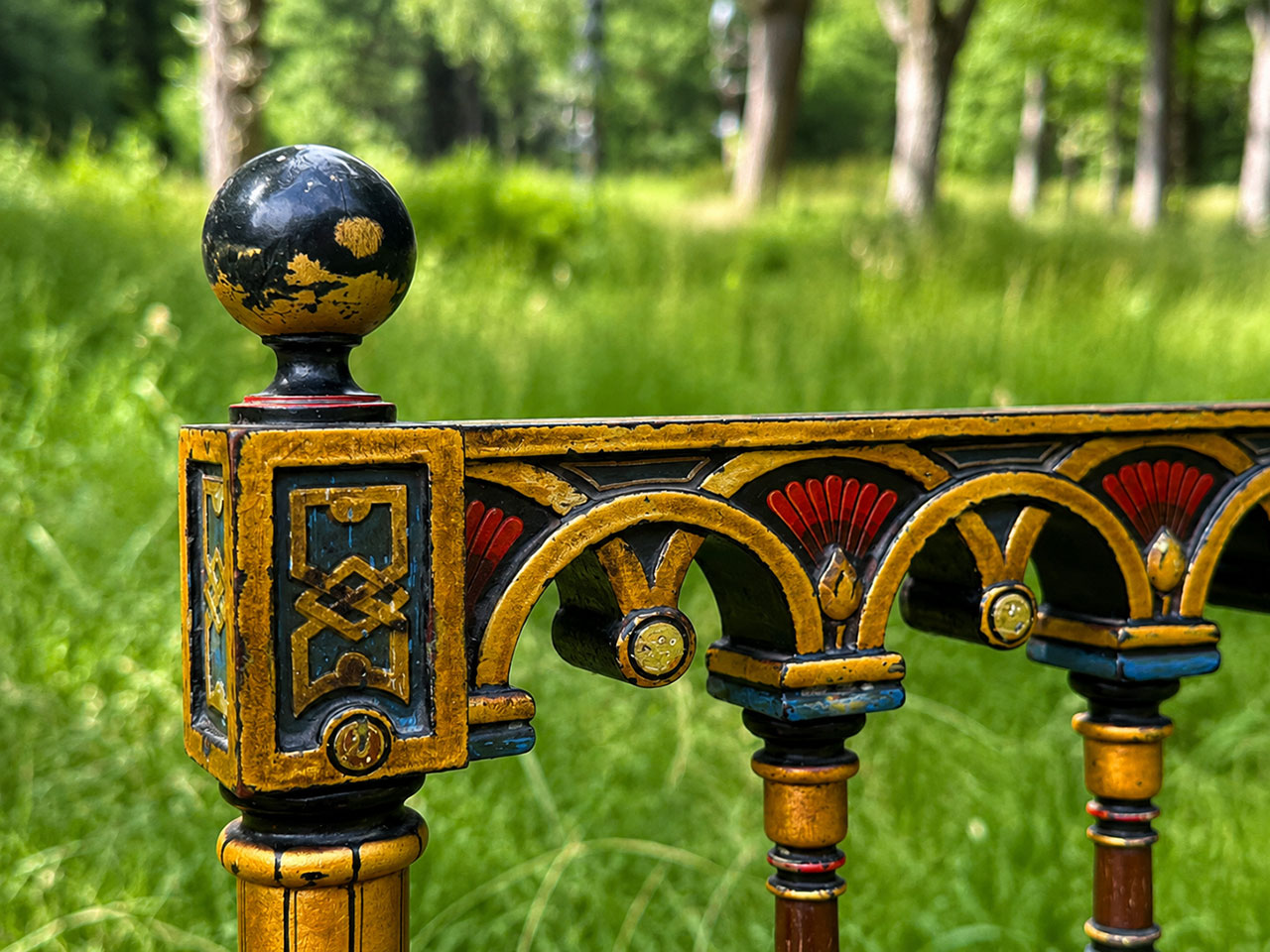
Photo: Benoist F. Drut
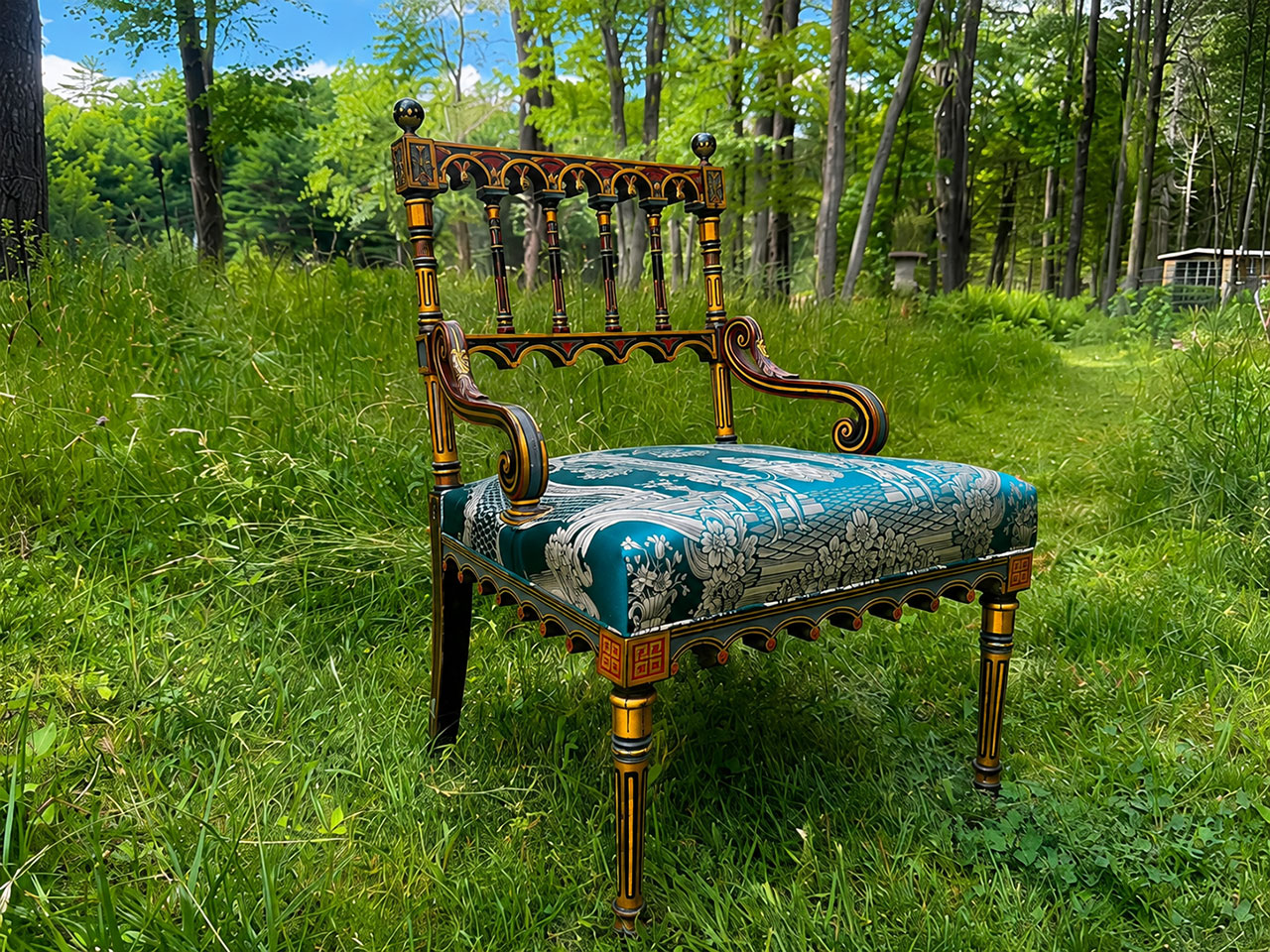
Photo: Benoist F. Drut
4. Napoleon III Musician’s Armchair.
This ornate Napoleon III musician’s armchair was originally designed for a music room or salon. Its unusually low arms allowed a cellist or violinist to sit comfortably while playing, making it as functional as it is beautiful.
I fell in love with it the moment I saw it. The chair retained its original polychrome finish and remained in remarkably good condition. It also immediately reminded me of Madeleine Castaing, the legendary French decorator, antiquarian, and muse to Chaim Soutine. Castaing was among the first dealers to champion furniture from the Biedermeier, Empire, and Napoleon III periods.
I vividly remember walking along Rue Jacob in Paris and glancing into the window of her gallery, only to see Madame Castaing herself adjusting her wig in a mirror. It was both a shock and a thrill. This is exactly the sort of chair she would have collected, which gives me enormous pleasure. I have since reupholstered it in a beautiful Prelle fabric that feels entirely appropriate to the period. I like to think Madame Castaing would approve.
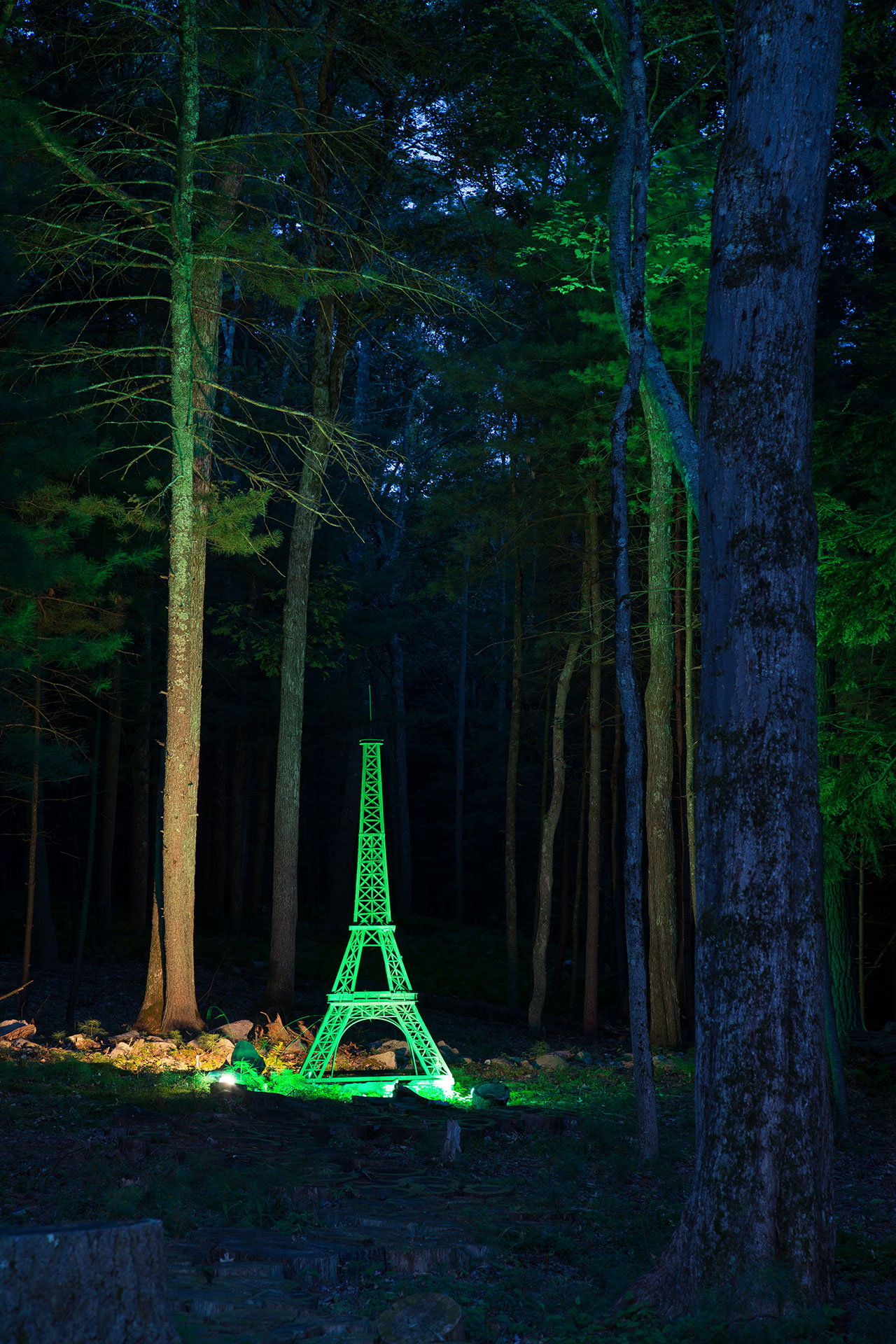
Photo: Jean Francois Jaussaud
5. Eiffel Tower sculpture
This Eiffel Tower sculpture stands proudly in my garden and was a gift from my dear friend Linda Chase. Every time I look at it, I am reminded not only of Paris, but also of Linda and the many things we appreciated in common.
Paris remains the city that shaped my eye as a collector and dealer. As a child, my parents took me to the Biennale, auction houses, and galleries, where I first learned to appreciate beauty, craftsmanship, and history. Later, as a university student, I continued exploring the city on my own, spending countless hours wandering museums, galleries, and antiques shops. It taught me how to truly look at objects and understand what makes them special.
Linda shared that same appreciation for beauty, craftsmanship, and design. The sculpture reminds me of our friendship and our mutual love of Paris, a city that inspired us both. It also brings to mind one of the most poignant lines from Casablanca: “We’ll always have Paris.” Every time I see it, I think of Linda, of Paris, and of the lasting power of beautiful memories.
Works, artists, and designers from Maison Gerard
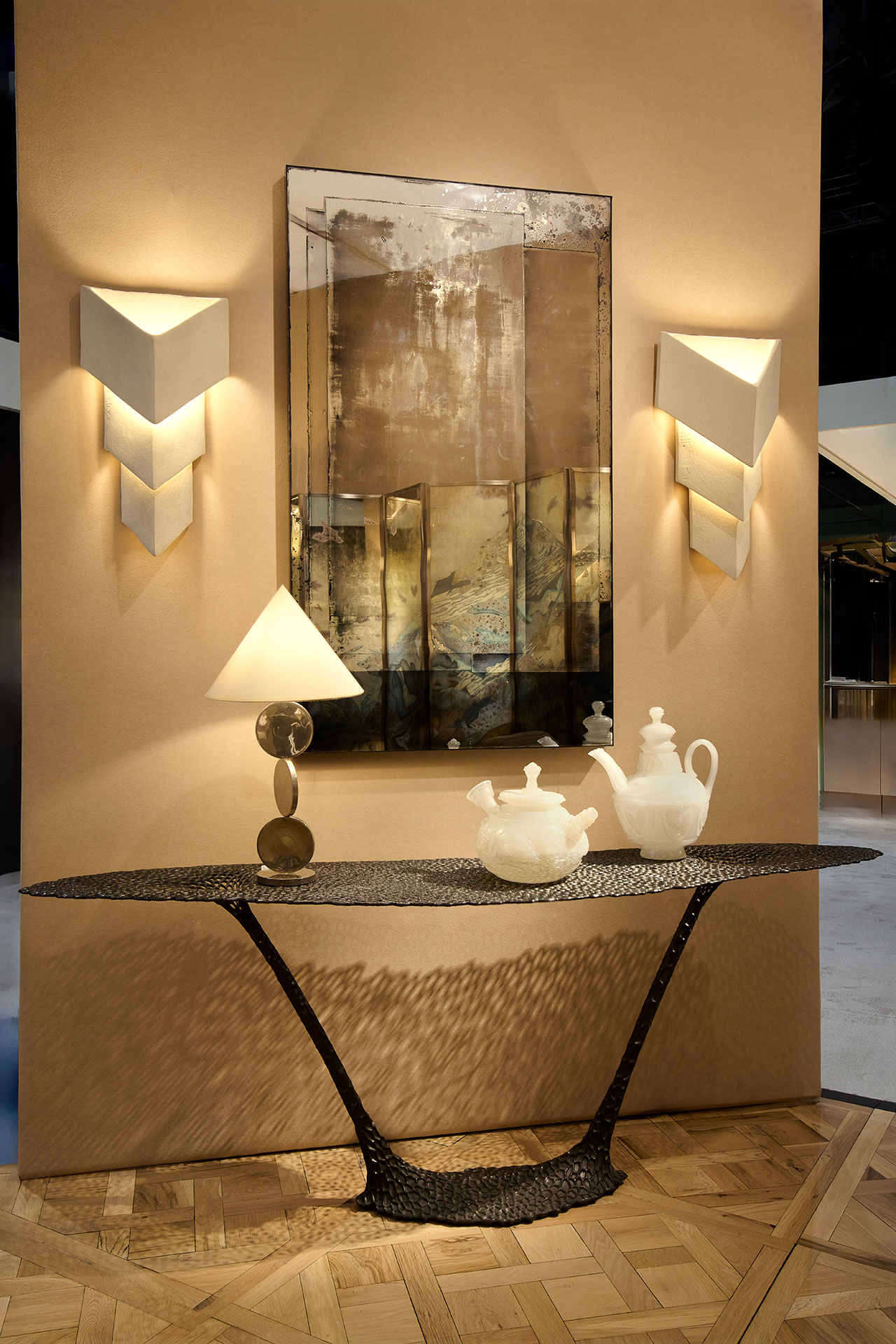
Kiko Lopez Elysium Wall Mirror and Ayala Serfaty Consola; The Winter Show 2026 \ Photo: Michael Mundy.jpg
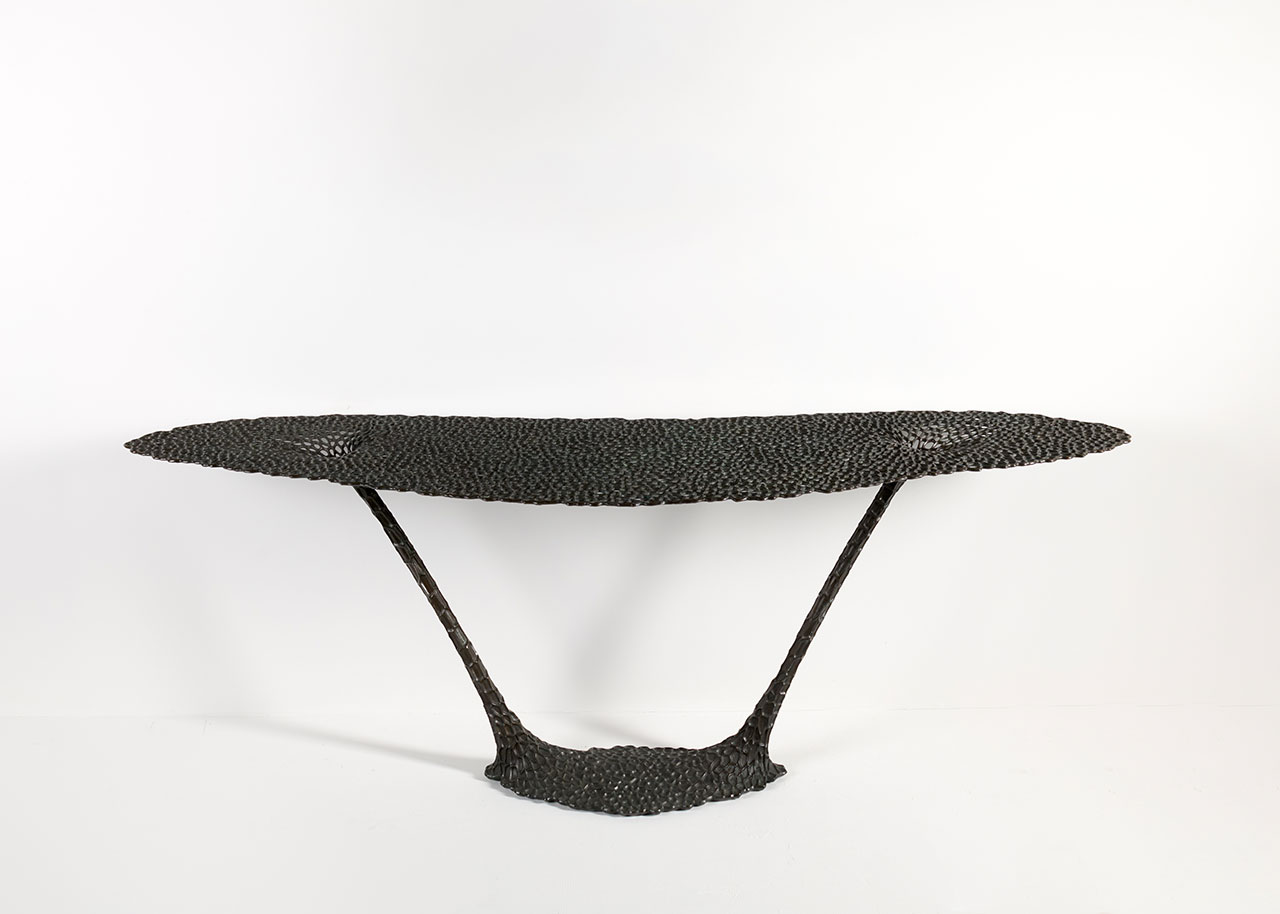
Ayala Serfaty Consola \ Photo: Arian Camilleri
Consola by Ayala Serfaty
Ayala Serfaty has built an extraordinary career exploring cellular structures and organic abstraction. She first became known for her sculptural lighting, composed of interconnected glass rods and a translucent polymer skin that evokes ethereal, luminous clouds. From there, she expanded into seating, creating works made of handmade felt that are composed almost like paintings, with custom colors, textures, and patterns unique to each piece.
Rather than resting on her success, Ayala continued to push her practice forward. For years, she pursued an ambitious goal: creating furniture entirely from glass. After extensive research, she realized the material would not achieve the results she envisioned and pivoted toward bronze, combining advanced 3D modeling technology with the ancient lost-wax casting process. The resulting tables possess delicate cellular structures that resemble lace.
Consola is, in my opinion, the finest example of her bronze work to date. The way light passes through its intricate surface and projects shadows onto the surrounding walls and floor is simply magical. Her talent has been widely recognized, with works in the permanent collections of the Musée des Arts Décoratifs in Paris, the Metropolitan Museum of Art, the Museum of Arts and Design, the Museum of Fine Arts in Boston and Houston, the Mint Museum, the Corning Museum of Glass, and the Indianapolis Museum of Art.
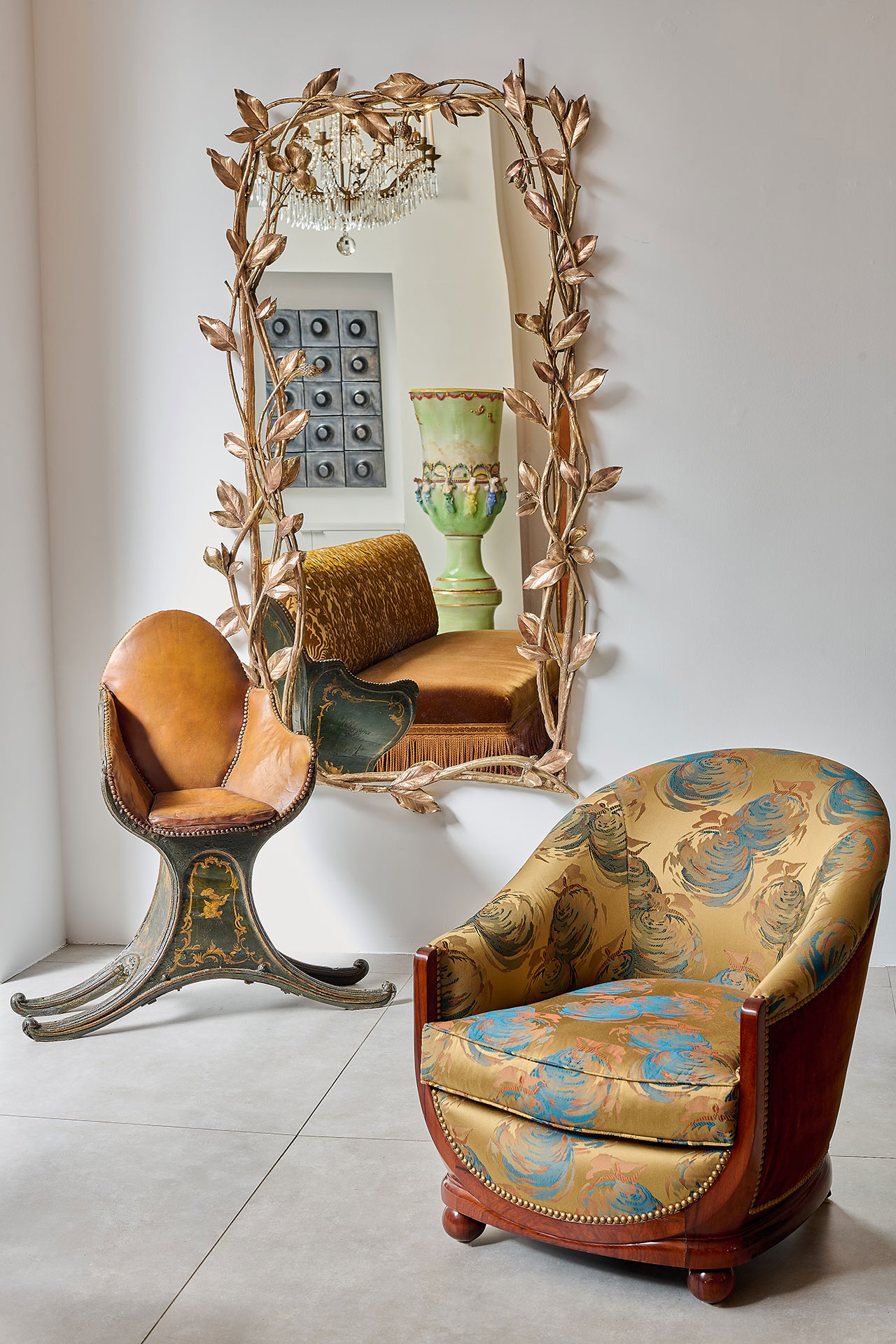
Osanna Visconti Exhibition at Maison Gerard, 53 East 10th Street \ Photo: Michael Mundy
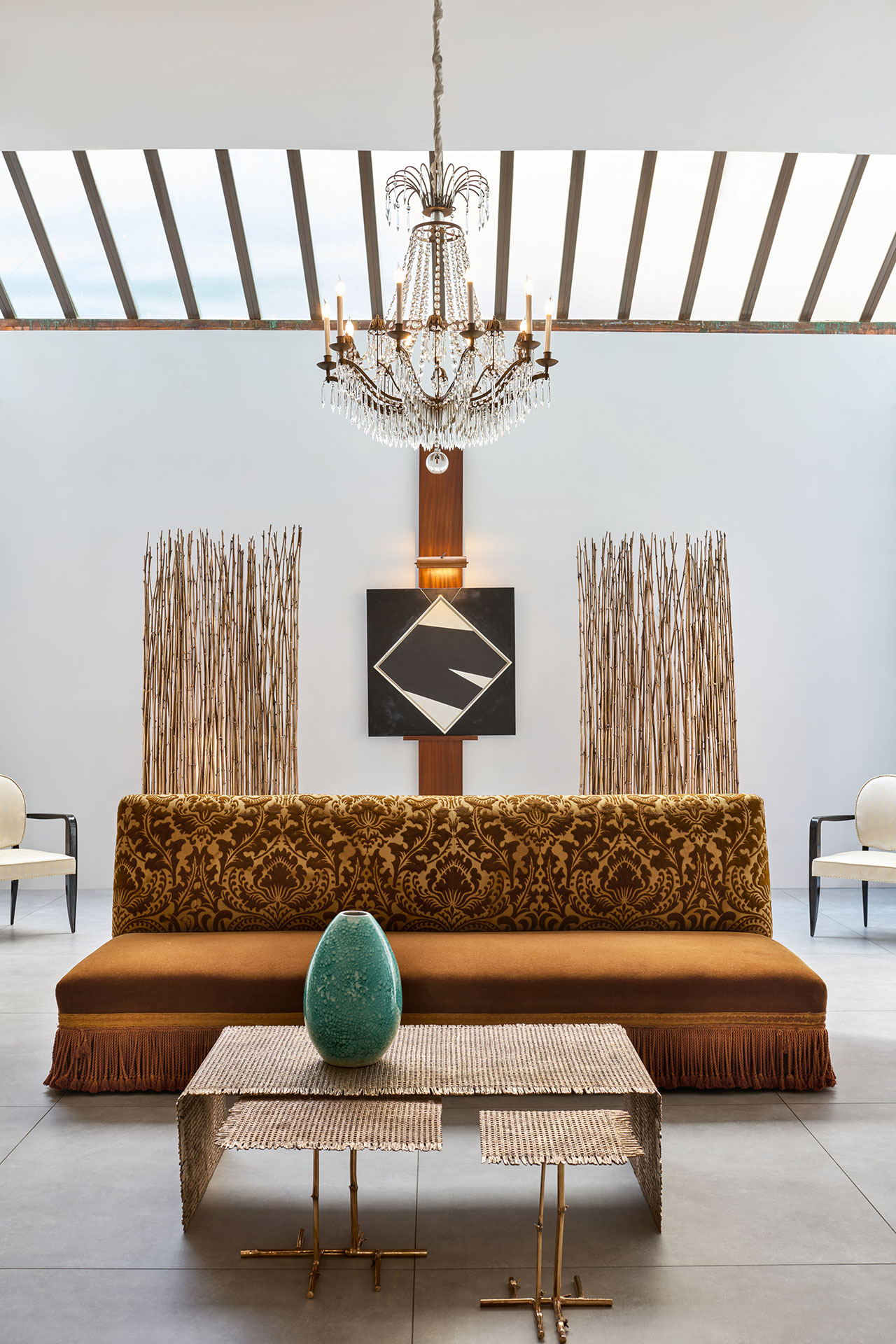
Osanna Visconti Exhibition at Maison Gerard, 53 East 10th Street \ Photo: Michael Mundy
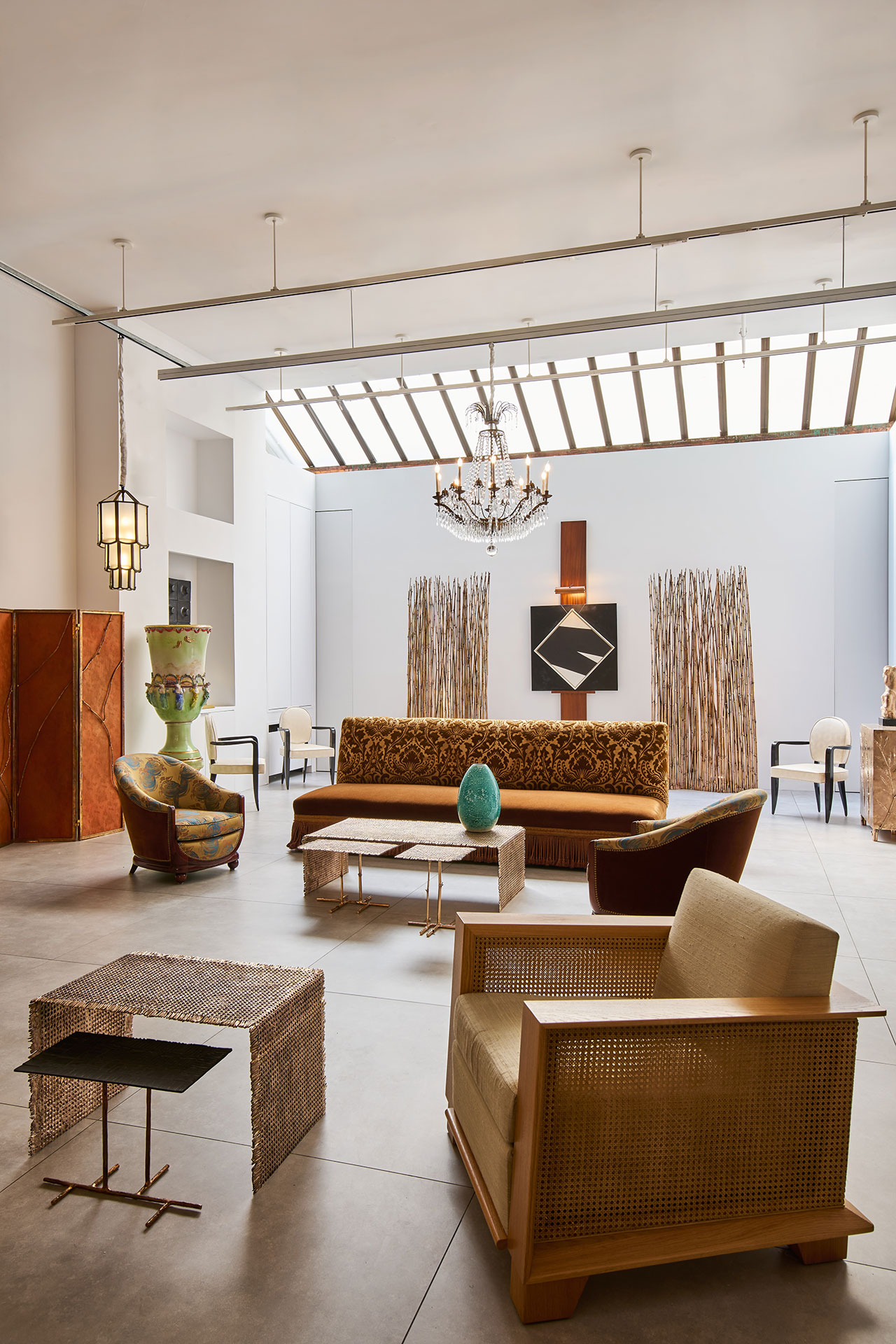
Osanna Visconti Exhibition at Maison Gerard, 53 East 10th Street \ Photo: Michael Mundy
Works by Osanna Visconti
Osanna Visconti is the newest artist to join my gallery, and I am continually captivated by the whimsy and technical mastery of her work. Every piece is created through the labor-intensive lost-wax casting process, resulting in truly one-of-a-kind objects.
Her inspiration comes directly from nature. Using bamboo stalks, magnolia branches, leaves, and other botanical elements, she first models each work in wax, then preserves a fleeting moment in time by transforming it into bronze. Through this meticulous process, nature is made permanent. Seasons change, flowers fade, and branches fall, yet Osanna’s works remain frozen in their most beautiful state.
What I find most compelling is the extraordinary level of craftsmanship required to achieve this effect. Through careful casting, chasing, and soldering, she creates works that are astonishingly faithful to their natural origins. They are not merely representations of nature—they are celebrations of its beauty and permanence.
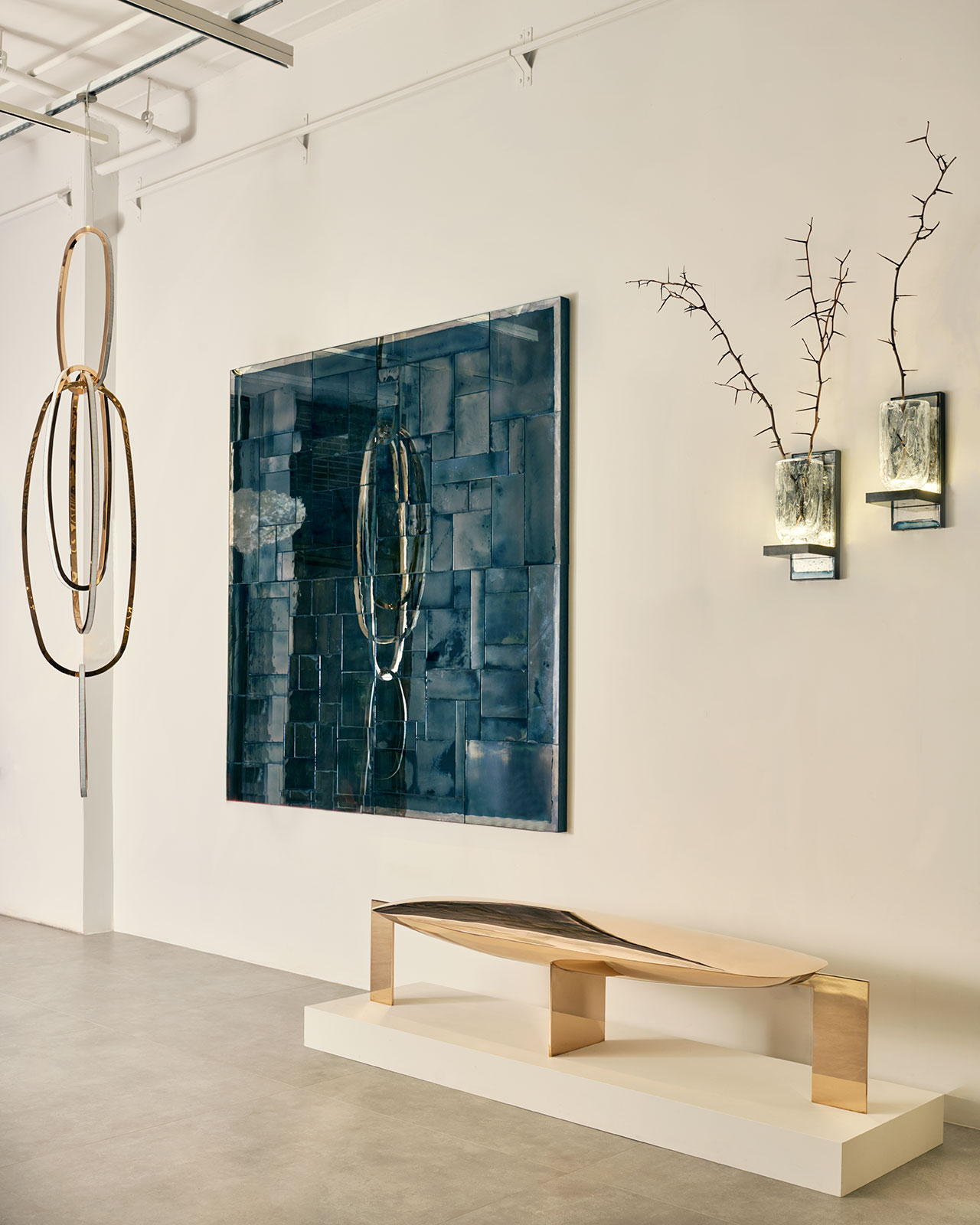
Kiko Lopez Les 100 Mirror Panel Painting at Maison Gerard, 53 East 10th Street
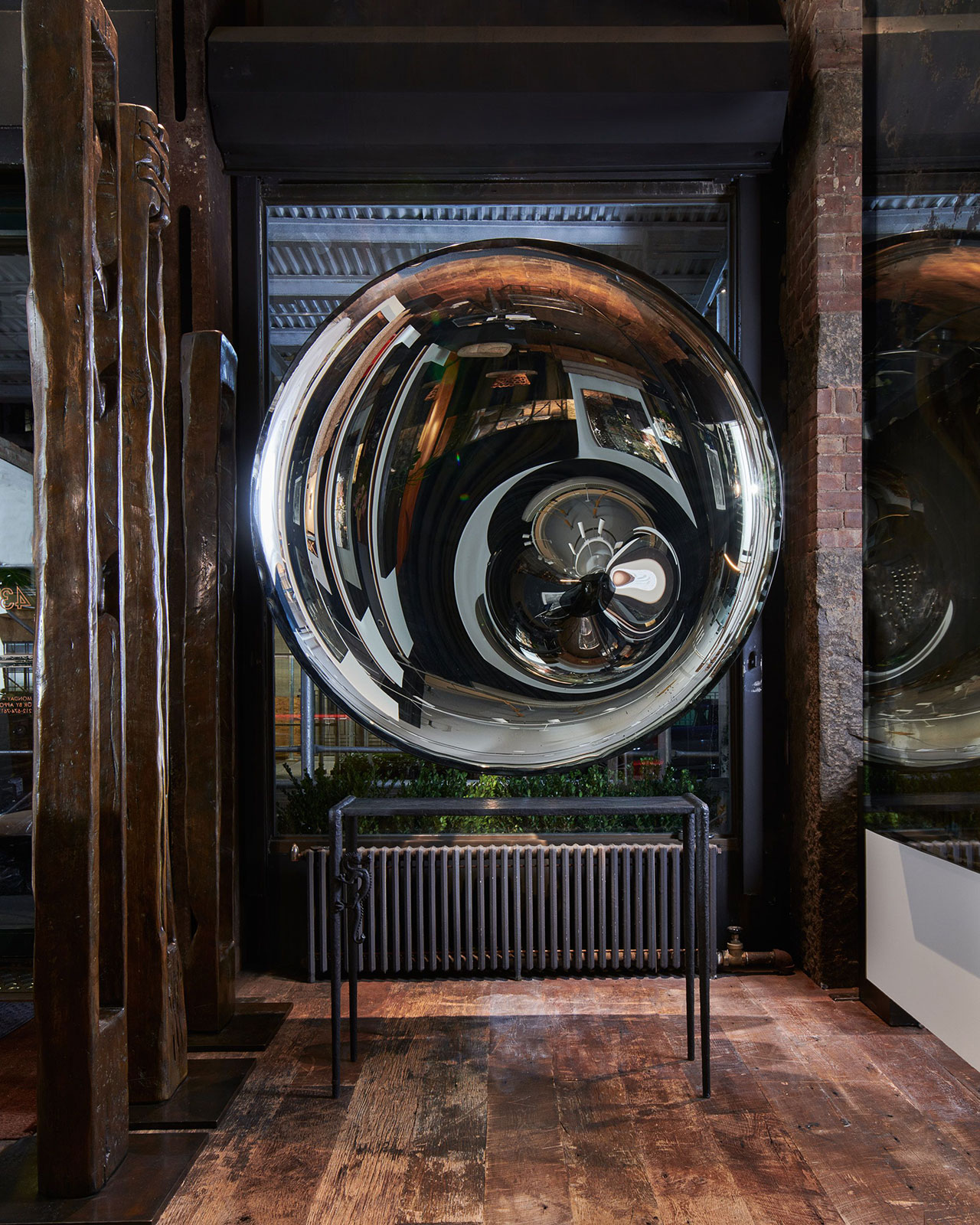
Kiko Lopez Oracle at Maison Gerard, 43 East 10th Street \ Photo: Michael Mundy
Kiko Lopez Wall Mirror at 40 East End \ Photo: Michael Mundy
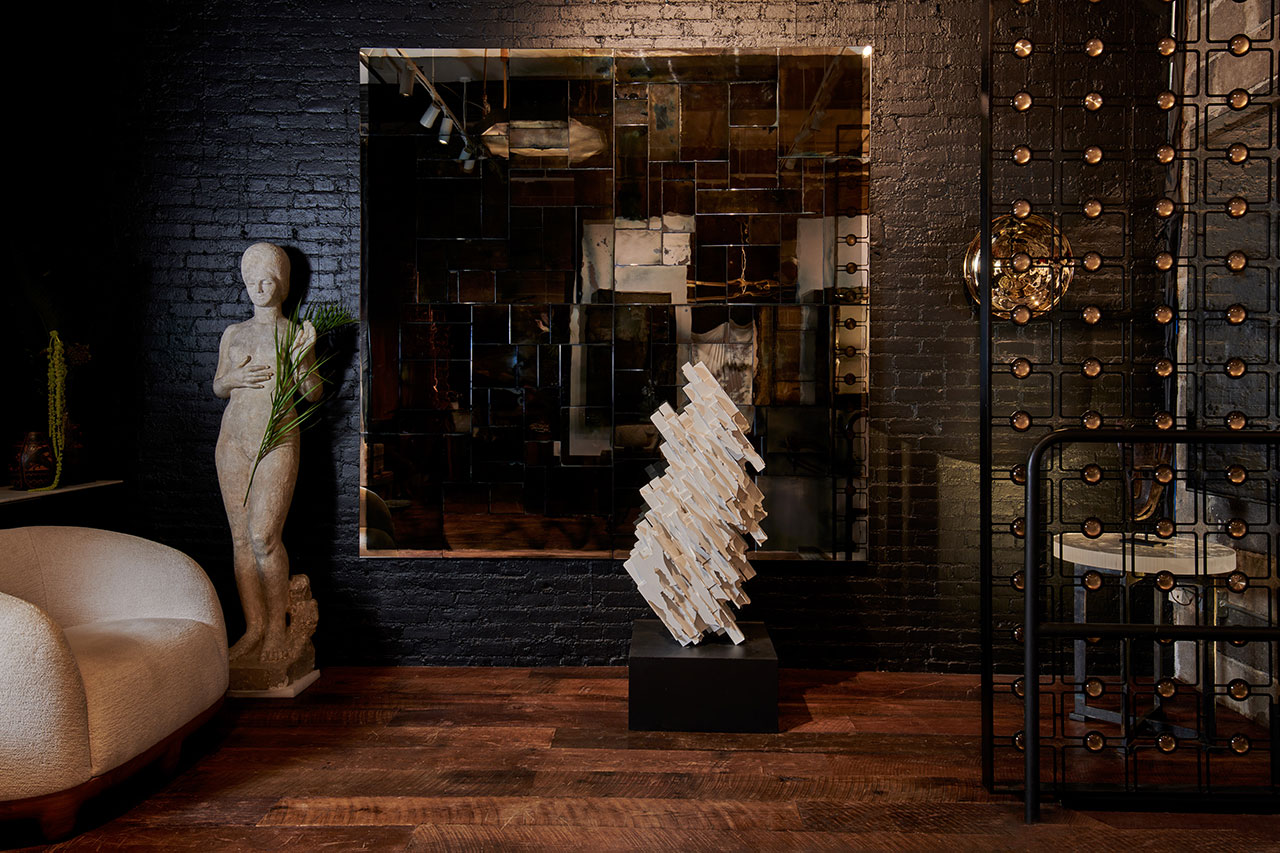
Mirrors by Kiko Lopez
Kiko Lopez is one of the few artists working today who has mastered the centuries-old craft of hand-silvering glass. Using techniques rooted in the traditions of églomisé and mirror making, he creates works that are far more than reflective surfaces. In fact, I often think of them less as mirrors and more as atmospheric paintings made of glass.
What I love most about Kiko’s work is that it is not concerned with providing a perfect reflection. Through the manipulation of silver, smoke, patina, color, and light, each piece transforms what it reflects. Some surfaces appear aged and mysterious, others luminous and ethereal. Depending on where you stand, the work is constantly changing.
Kiko often speaks about the tension between object and space, and his mirrors embody that idea beautifully. They amplify the light, architecture, and atmosphere around them, creating something entirely unique in every setting. By combining one of the oldest decorative arts techniques with a distinctly contemporary sensibility, he has reinvented what a mirror can be.
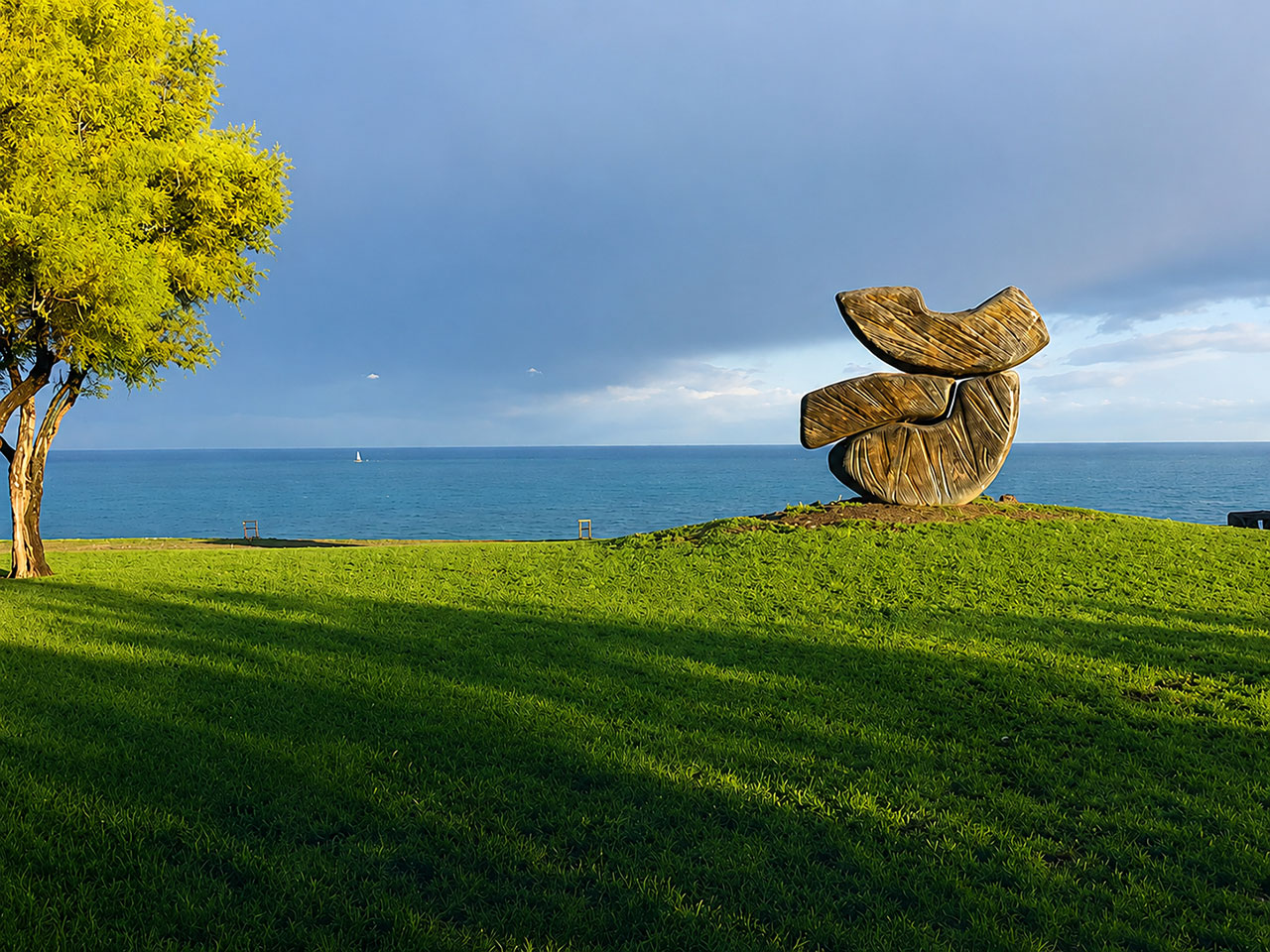
Olerki sculpture by Basque artist and sculptor Kepa Akixo Zigor overlooking the Atlantic Ocean in Biarritz France \ Photo: Benoist Drut
Olerki by Zigor
For more than fifteen years, Maison Gerard has represented Kepa Akixo, the Basque artist known as Zigor. He is a true multidisciplinary talent—equally comfortable as a sculptor, painter, poet, photographer, or working with a chainsaw in hand. There is a rare freedom and authenticity to his practice that I greatly admire.
The sculpture pictured here, Olerki, is a striking, sweeping form that stands dramatically above the crashing waves of the Atlantic Ocean in Biarritz, France. Every time I see it, I am reminded that this is one sculpture I should have purchased when I had the chance. It possesses a powerful presence while remaining elegant and poetic, qualities that define Zigor’s work. I often imagine how magnificent it would look overlooking the landscape of my own property.
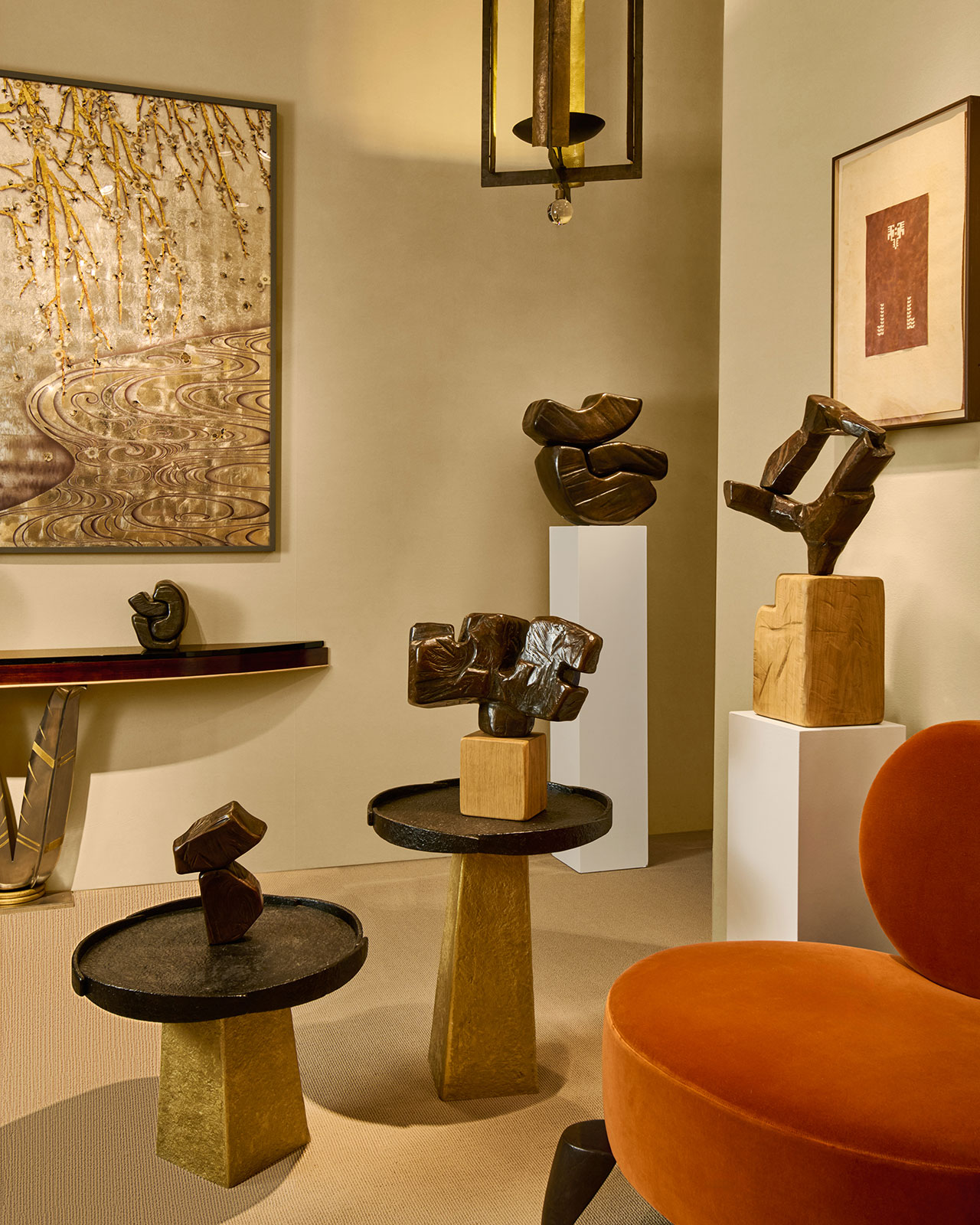
Aline Hazarian Arpi Small Coffee Tables at the Maison-Gerard Winter Show 2025 \ Photo: Michael Mundy
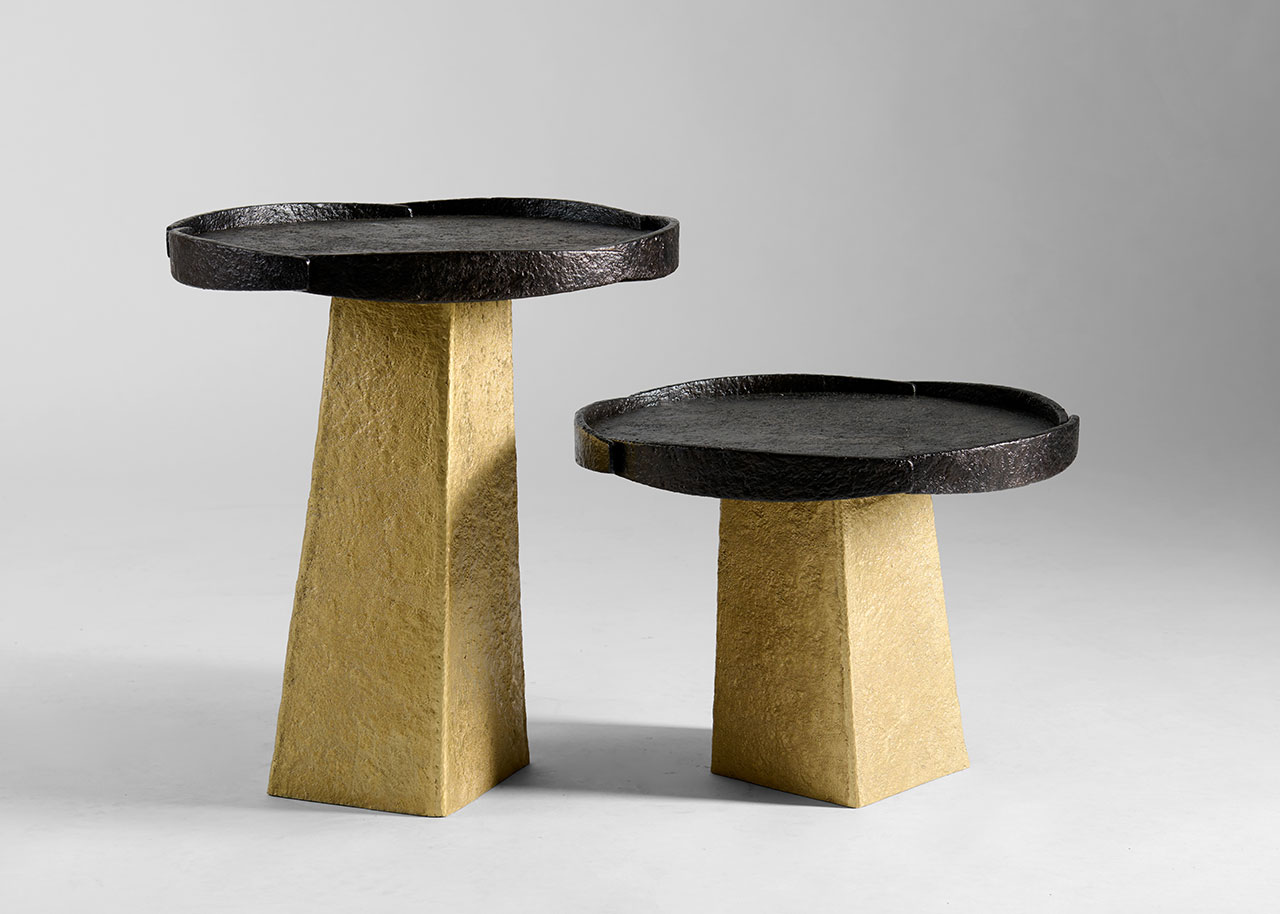
Arpi Coffee Tables \ Photo: Arian Camilleri
Arpi Tables by Aline Hazarian
Aline Hazarian’s Arpi tables are crafted in blackened and polished bronze and demonstrate how a small object can have an outsized impact. While I appreciate each table individually, I especially enjoy grouping them together in twos or threes at varying heights.
When arranged as a composition, they become almost sculptural, creating rhythm and movement within a room. Their asymmetrical legs give them a sense of playfulness and spontaneity that I find endlessly appealing. They are versatile, functional, and quietly sophisticated—the perfect accent tables.