Mercer Labs Explores Football Through Immersive Design

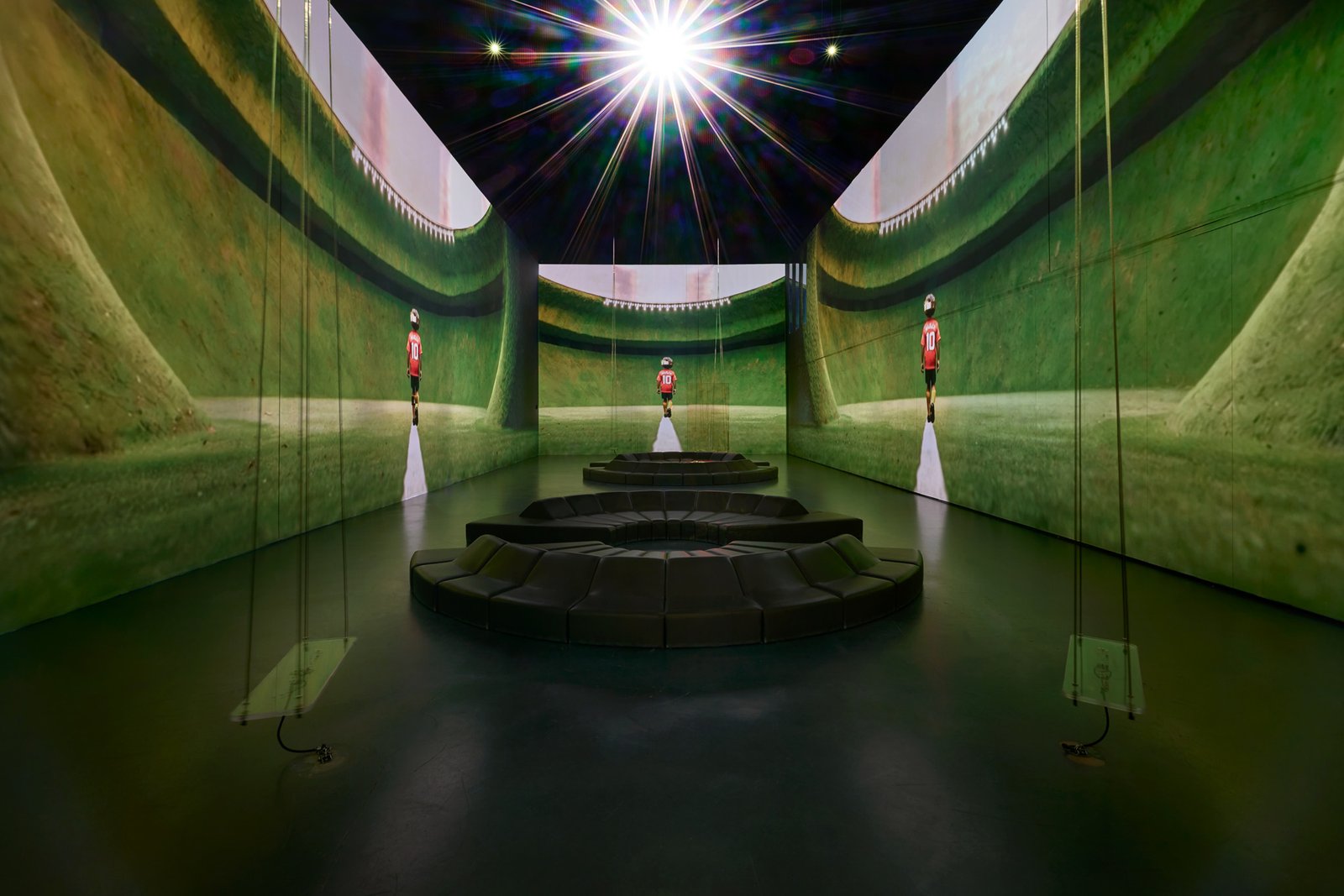
Immersive exhibitions have become a defining museum format, but the most memorable experiences do more than surround visitors with dazzling visuals. They use technology as a storytelling medium. That’s the approach behind Football is Freedom, the latest exhibition at Mercer Labs Museum of Art and Technology in New York, where artist Roy Nachum, in collaboration with Rohan Marley and the Marley family, explores football as a shared cultural language through architecture, interactive media, and spatial design.
Rather than tracing the history of the sport, the exhibition examines football as a universal connector—one that shaped Bob Marley’s life alongside his music and continues to bring people together across cultures and generations. Spanning 40,000 square feet over three floors, Football is Freedom unfolds through 15 installations that combine 360-degree projection, volumetric light, robotics, digital media, and interactive systems into a single narrative experience.
Football is Freedom spans 15 immersive installations across three floors at Mercer Labs in New York City. Photography by Peter Murdock.
The exhibition is organized around three conceptual chapters: the past, present, and future. The first draws from Marley’s lifelong relationship with football, weaving his words, imagery, and legacy throughout the experience. The present captures the collective energy of the modern game, while the future imagines how emerging technologies might reshape both sport and shared experience.
Rather than relying on a single immersive environment, Mercer Labs treats each installation as its own distinct spatial experiment. Field of Dreams surrounds visitors with a 360-degree cinematic landscape, while The Journey transforms mirrored surfaces, light, and reflection into an infinity environment inspired by the idea of movement and collective experience. Nearby, Future imagines a speculative training ground where glowing architectural forms, robotics, and athletic performance converge inside a futuristic arena.
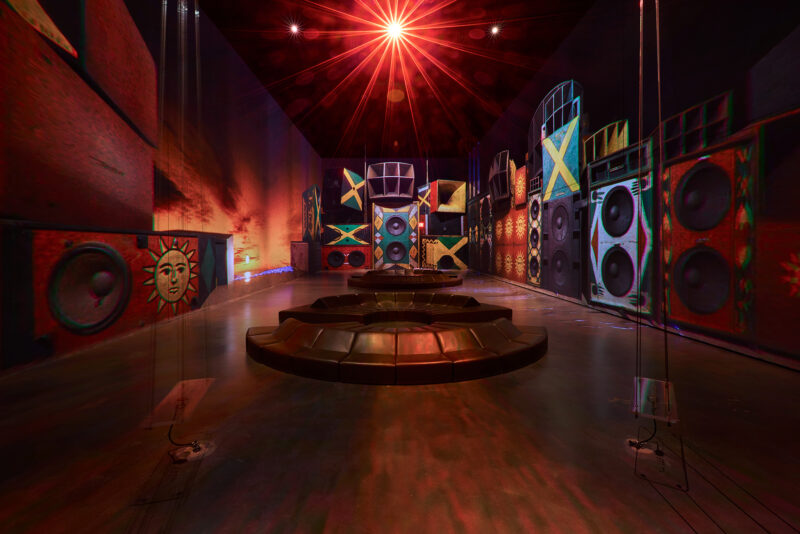
Light, projection, and interactive technology transform football into a shared cultural experience. Photography by Peter Murdock.
Interactivity also plays a central role throughout the exhibition. Visitors can create digital characters that become part of the evolving Crown Kids ecosystem, while The Cello invites audiences to shape an ever-changing musical composition performed by robotic instruments. Elsewhere, Words of Freedom features a robotic arm continuously writing and erasing messages in sand, turning language into a meditation on memory and impermanence.
Even the exhibition’s quieter moments emphasize material experimentation. In Unity, Bob Marley’s lyrics are translated into Braille before being converted into mechanical musical compositions, reframing language as both tactile and auditory experience. Across the exhibition, familiar technologies are repurposed as creative tools, blurring the boundaries between installation art, digital design, and museum experience.
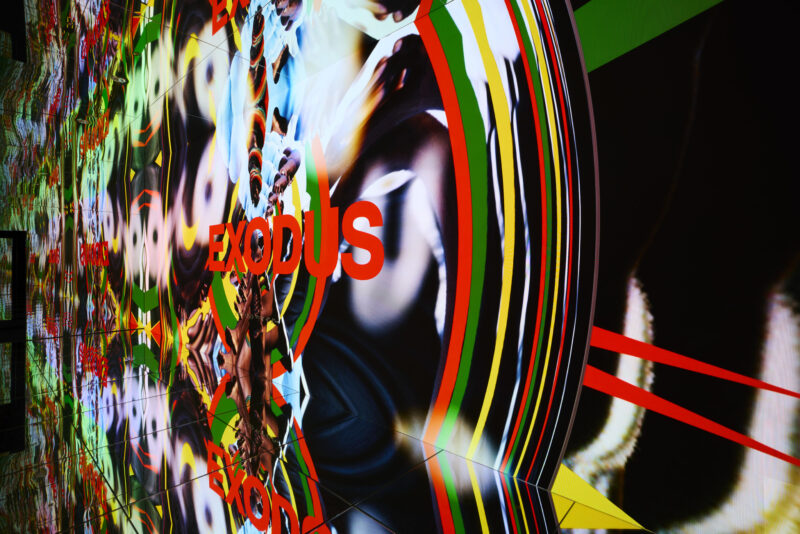
Reflective surfaces, volumetric light, and digital environments create a series of immersive spatial experiences. Photography by Peter Murdock
As museums continue to embrace immersive storytelling, Football is Freedom offers a reminder that technology alone isn’t what creates meaningful experiences. Instead, Mercer Labs uses light, movement, interaction, and spatial design to build environments that encourage participation, inviting visitors to explore how play, creativity, and collective identity can occupy the same space.
Football is Freedom is on view at Mercer Labs Museum of Art and Technology in New York City until Jul. 31.
Editorial Transparency: This article was developed with the assistance of AI tools, which may have been used for research, outlining, editing, or copy refinement. Reporting, fact-checking, and editorial decisions were made by the Design Milk editorial team.