Never Plug These Devices Into a Smart Plug

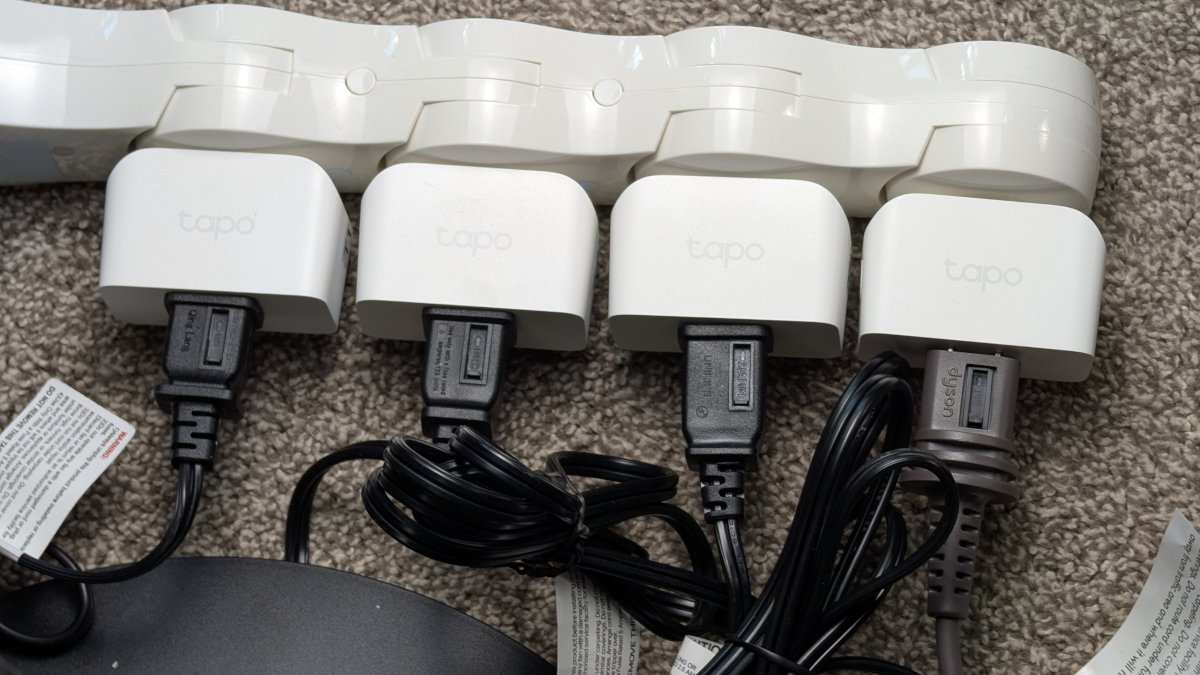
Smart plugs can provide an incredible amount of convenience for your home. They’re an easy way to upgrade basic electronics, like lamps and fans, with modern capabilities, like app or voice control. However, they’re not designed to handle everything.
Certain high-powered and critical appliances can lead to damaged equipment when plugged into your smart plug, creating safety risks or leaving essential systems vulnerable to failure. Most smart plugs are built for relatively low, steady electrical loads, not devices that generate heat or that rely on motors.
We talked to Kamran Khan, the founder and managing director of SilverWater Plumbing and Electrical, to learn about some common devices you should never plug into your smart plugs and why it matters.
Space heaters
Plugging basic space heaters into a smart plug is a fairly common mistake, and it’s one you should avoid. Many portable space heater models draw between 1,200 and 1,500 watts continuously, right around the upper limit for most consumer smart plugs. It’s also worth noting that most US outlets are suited for 15 or 20 amps, while some smart plugs from less reputable manufacturers aren’t rated for that amount of draw.
There’s also the issue of energy draw spikes. High-wattage heating devices like space heaters can draw from 1,000 to 1,800 watts in instantaneous spikes, according to Khan.
“This type of heat stress will do more damage than running continuously with moderate power,” he said. “In our electrical work, we’ve removed smart plugs from the wall that have been visibly discolored or warped from heat generated by these types of devices. The homeowner was completely unaware that anything was wrong with the plug. The damage accumulates and there is no indication that something is going wrong until it breaks.”
Even if a plug supports that kind of load, sharp spikes or running at maximum capacity for long periods can stress internal electronic components. Over time, it may multiply the probability of overheating your plug, failure or, in extreme cases, fire. Manufacturers typically advise plugging a space heater directly into a wall outlet to mitigate these issues.
Hair dryers, toasters and hot plates
 Luke Westaway/CNET
Smaller appliances like hair dryers, toasters and hot plates combine high wattage with the potential for massive power spikes. Switching them on may result in drawing more power than many smart plugs are designed to handle.
That kind of repeated stress may lead to degradation of internal components in a plug, especially in lower-cost models, leading to unreliable or unsafe operation. Any device that heats up quickly or cycles on and off at high power is best not used with a smart plug.
Refrigerators and freezers
 Tyler Lizenby/CNET
Refrigerators and freezers present a wholly different challenge: compressor-driven startup surges. Every time the compressor kicks on, it may end up drawing significantly more power than its normal running load.
“When motor-driven appliances start up,” Khan said, “they generate compressor and inductive surge currents that can be as much as three times their running ramp amperage. And a smart plug’s internal relay has no way to absorb these repeated surges over time. I’ve seen relay degradation occur well before any external damage appears on the plug itself.”
Those spikes can exceed a smart plug’s limits, even if everything appears fine on paper. There’s also a practical risk. If the plug loses connection, resets or is accidentally turned off, your appliance could stop running without warning. When you’re talking about refrigerators and freezers, that means food spoilage and the potential for costly losses.
Sump pumps
Sump pumps are critical for preventing basement flooding, especially in times of heavy rainfall, rapid snowmelt or other inclement weather conditions. Adding a smart plug introduces an unnecessary point of failure to a critical appliance.
If the plug malfunctions or loses power, the pump may fail to activate when it’s needed most. The result can be severe water damage to possessions in your basement. For essential systems like this, reliability is far more critical than convenience.
Washing machines, dryers, air conditioners and power tools
 Elizabeth Messina/CNET
Large appliances and power tools frequently rely on electric motors, which behave differently from simple electronics.
As Khan points out, “a smart plug is a convenience tool and was not made to serve as a power management solution for your heaviest appliances.”
At startup, many of these devices draw a high inrush current. This means a brief surge that can strain or wear down a smart plug’s relay contacts over time. Repeated exposure can shorten the lifespan of the plug or cause it to fail unexpectedly, which can in turn short out the plug or the device.
“While smart plugs typically have a UL rating of 15 amps maximum,” Khan said, “that ceiling is only safe for stable, resistive loads. It’s not safe for the inrush current or surge created by motorized or heating appliance loads, which occurs at start-up.”
Common examples include:
- Washing machines and dryers
- Portable air conditioners
- Power tools such as drills, saws or air compressors
What smart plugs are actually good for
 Tyler Lacoma/CNET
That said, there are a number of safe, common and practical uses for smart plugs, as long as you’re pairing them with appropriate devices. They work best with electronics that have a consistent, low overall power draw and those with a simple on/off operation.
Good candidates for most smart plugs include:
- Lamps and lighting
- Fans
- Phone and laptop chargers
- TVs and streaming devices
- Coffee makers with mechanical switches
Use a smart plug well, and it could end up saving you money. I recently did a whole-house audit to uncover some of the worst energy vampires in my setup using a cheap energy monitor, and a smart plug could help mitigate some of that energy loss.
The bottom line
Smart plugs are a convenient upgrade, but they’re not a universal solution. High-wattage heating devices, motor-driven appliances and anything critical to your home’s safety or infrastructure should stay plugged directly into a standard wall outlet.
If you’re unsure about what you can use with your smart plug, check both the smart plug’s rated capacity and the appliance’s power requirements, then leave yourself a margin of safety. In the US, look for the UL Solutions or ETLA (the mark used by Intertek’s testing program) listing mark, which indicates a smart plug was evaluated for risks such as fire, shock and mechanical hazards.
A common North American smart plug rating is 15 amps at 120 volts, which corresponds to about 1,800 watts maximum. Use the appliance’s nameplate current or wattage, then keep the load comfortably below the plug’s continuous limit, not just its peak rating. For a 120-volt smart plug, anything under about 10 amps continuous, or under roughly 1,200 watts for a margin of safety, is a conservative target; the absolute device limit is often 15 amps or 1,800 watts.
If you’re looking for a new smart plug, check out our top pick, the $12 Emporia smart plug, which is compact, inexpensive and simple to set up. If you want a dual-outlet option, consider the $27 Govee Dual Smart Plug, which is also really well-priced and comes with a great, easy-to-use app.

See full bio