Armando Cabral Reimagines USM’s Haller System

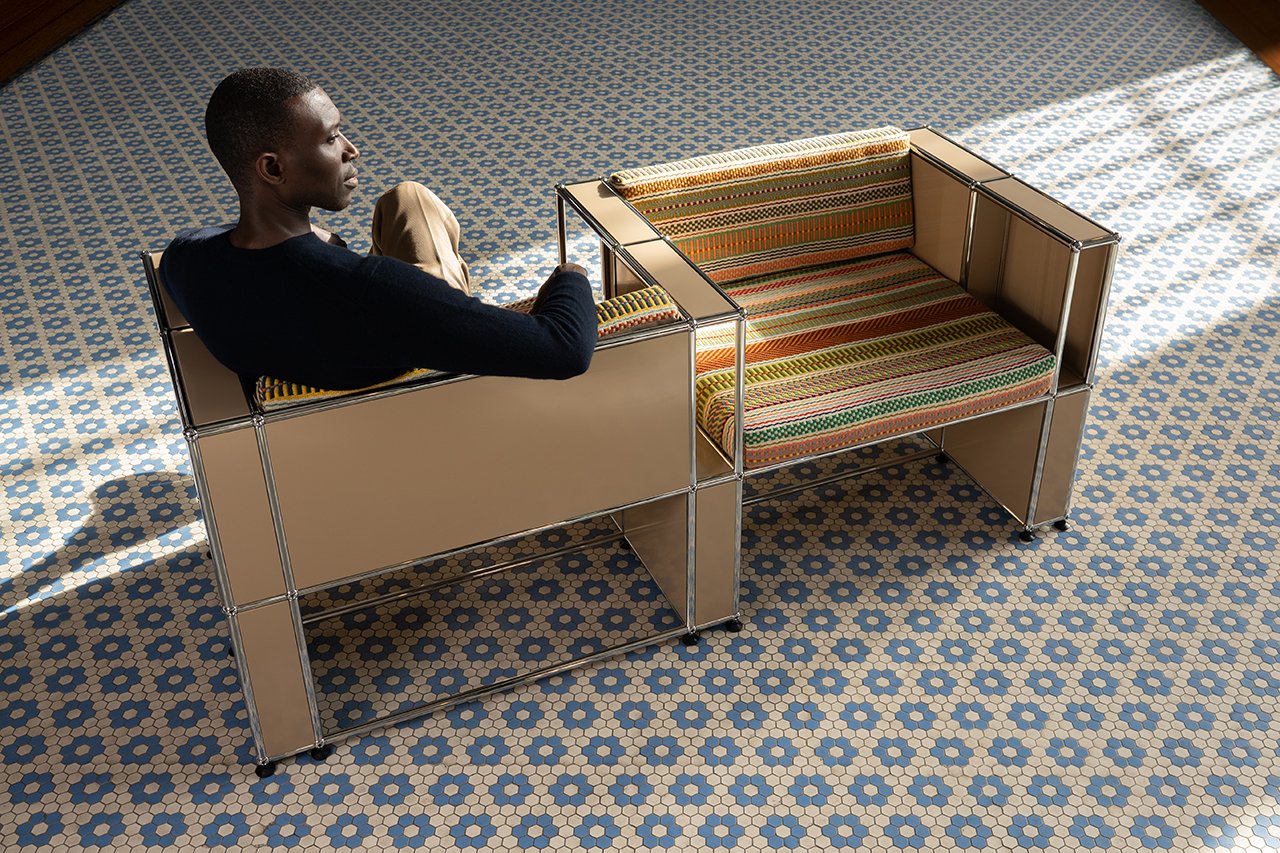
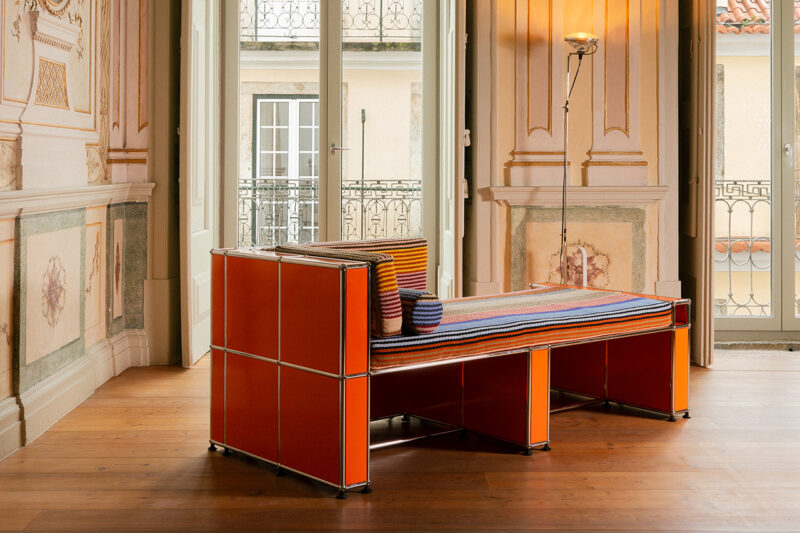
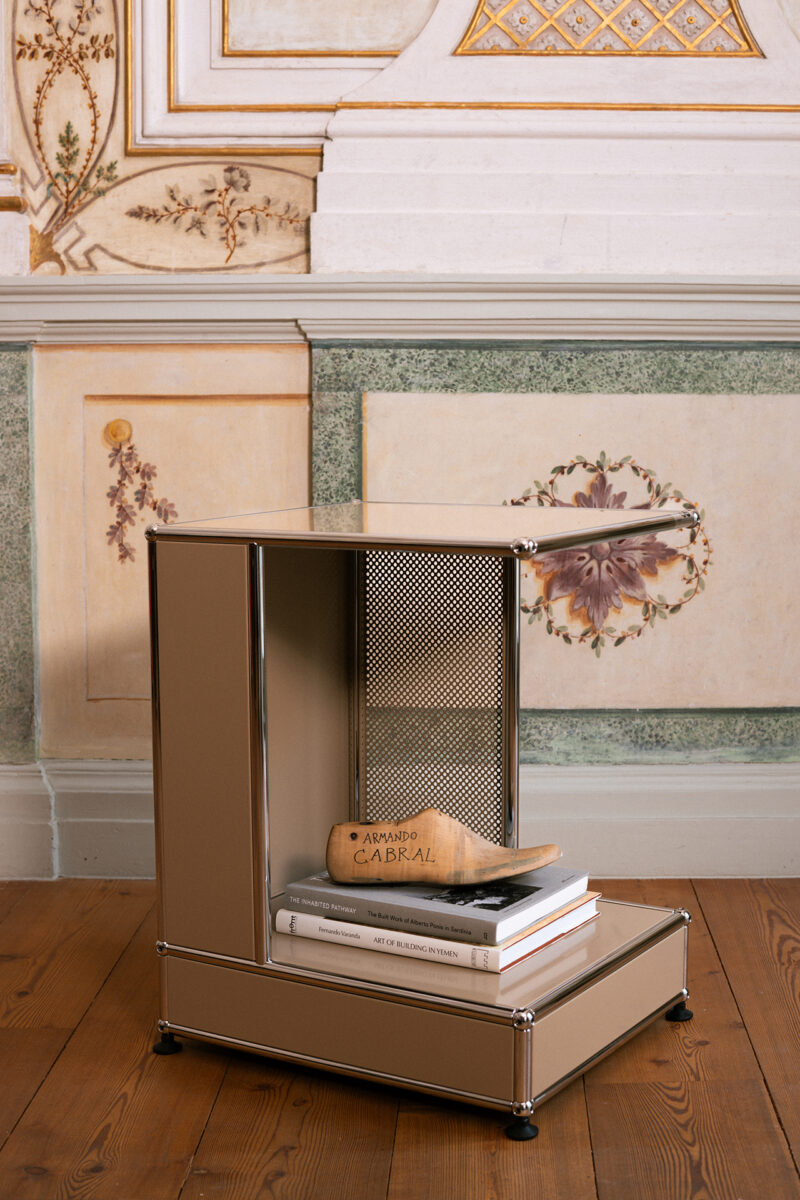
Wrapped in elaborate, multi-directional striped fabrics, the cushions in Armando Cabral’s new USM-assembled furnishings reinterpret the centuries–old weaving traditions of Portugal’s Alentejo region in a new way. Featuring a daybed, love chair, bookshelf, side table, and valet wardrobe, the recently expanded NKYINKYIM A CASA collection reflects the value of cross-cultural exchange and demonstrates how furniture can serve as a means of personal and shared cultural expression. For Cabral, a former top-ranked model and now lifestyle entrepreneur, the fresh offering in the Haller System is a chance to reflect on his own multinational upbringing.
Photography by Inês Silva Sá
Born in Guinea-Bissau, raised in Portugal, educated in London, and now based in New York, Cabral’s reference points are diverse but also inherently interconnected. The first word of the eight-piece collection, “NKYINKYIM,” derives from the Adinkra symbol (a visual language developed by the Akan people of Ghana and Côte d’Ivoire) that represents the intertwining paths of progress and overcoming challenges, both as an individual and as a collective. “A Casa” is the Portuguese phrase for “at home.”
Photography by Inês Silva Sá
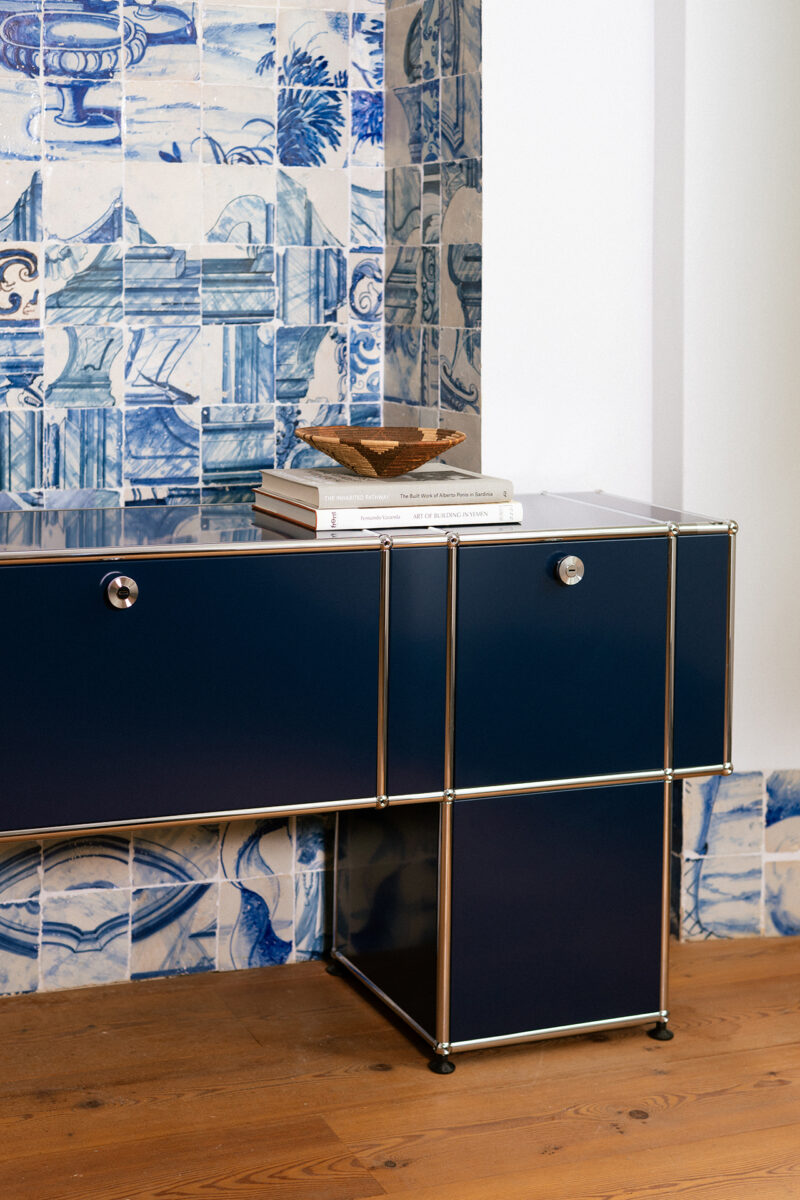
USM’s iconic Haller System reflects a hyper-rationalist mindset, one that might seem devoid of clear cultural identity, echoing the ideals of post-World War I modernism. Ironically, the pared-back, form-follows-function philosophy embodied by the modular furniture solution is emphatically Swiss: hyper-efficient and neutral. Despite its near-endless interpretations through USM’s many collaborations over the past few years, the Haller System still carries that sophistication—which serves as a canvas for Cabral’s exploration.
Photography by Inês Silva Sá
“To me, the modular nature of USM’s designs symbolizes the way each component forms a cohesive, functional structure,” he says.
Through experimenting with color palettes and asymmetrical compositions, Cabral worked within the confines of the brand’s signature system. The result is a collection that integrates seamlessly with other components of the Haller System. In doing so, he pushed the potential of its use and function even further. It’s a sort of provocation for the viewer to reconsider what furniture, overall, can accomplish.
Photography by Inês Silva Sá
For example, the Uno Bookcase takes on the unexpected shape of geometric symbolism through its steel tube-and-connector-ball structure, accented by colored insert panels. Meanwhile, the Bassarel Love Chair boldly reprises the age-old tête-à-tête typology. Two chairs are placed side by side while facing opposite directions to facilitate more intimate, gossipy exchanges. The collection balances both visual and practical attributes in a coherent, playful, yet refined fashion.

Photography by Inês Silva Sá